
Ancestor worship (thờ cúng tổ tiên)
Parents, grandparents, lineage
- The altar
- Main home altar, highest in the house
- The offering
- Savoury or vegetarian meal, fruit, water, tea, rice liquor, flowers, incense, votive paper
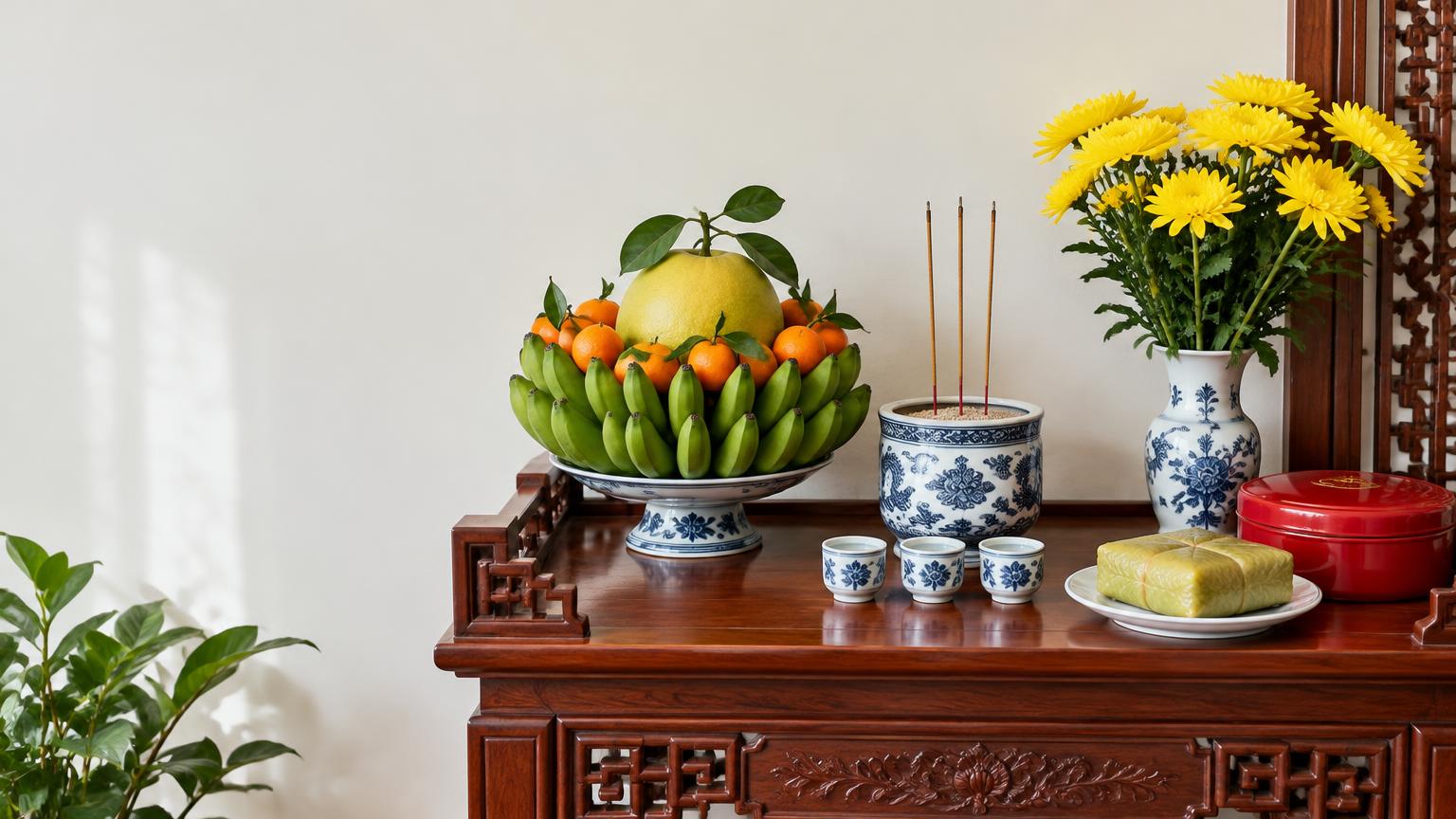
The ritual behind the basket.
A near-universal practice. A lunar shopping rhythm. A changing offering basket, shaped by respect, family and what happens after the rite.
Consensys · 17 October 2026 · Background + updated commercial research
The executive read
Ancestral and folk worship set much of the rhythm. Buddhism adds vegetarian rules, pagodas and Vu Lan (Buddhist filial-piety day). Treating the market as only Buddhist misses the wider household practice.
95%
have an altar at home
Vietnamese adults, as cited in the report · Pew Research, 2024
86%
offer food or drink yearly
To ancestors, at least once a year · not monthly frequency · Pew, 2024
Visual evidence & references
Photographed ritual setting
A photographed Tết altar brings Coca-Cola cans and packaged products together with fruit, flowers and ceremonial cups. One scene, not a brand-penetration estimate.
VietnamPlusPublished brand feature
ChocoPie boxes appear alongside traditional dishes and altarware in a Vietnamese household scene reported by Newdaily.
Newdaily KoreaWorship is not a niche occasion in Vietnam. 95% of adults have an altar at home and 86% put food or drink on it for their ancestors at least once a year; among people who say they have no religion the figure is 92% (Pew Research, 2024). The practice is ancestral and folk first, Buddhist second: Buddhism supplies the vegetarian rules, the pagoda and Vu Lan (Buddhist filial-piety day), but the altar, the fortnightly rhythm and the savoury trays come from ancestor and household-god worship, and most people doing it do not identify as Buddhist.
The demand runs on three clocks. A long Tết (Lunar New Year) ramp (4–6 weeks of packaged-goods and gift buying, peaking two weeks out), a second peak in lunar month 7 (Vu Lan and the hungry-ghost offerings), and a fortnightly baseline on mùng 1 and rằm (1st and 15th of the lunar month), plus daily offerings on every shop's Thần Tài (God of Wealth) altar in the South. Life events (openings, new cars, baby rites, and above all deaths and death anniversaries) add unscheduled occasions all year.
For packaged goods the rule set is simple and consistent: sealed, whole, new, visibly clean, red or gold, in ritual counts (3, 5, 9, 10, 12) rather than bulk, and good to eat afterwards because almost every offering is eaten by the family as lộc. Biscuits and confectionery, tea, white rice liquor, sugar, rice and salt have a ritual foothold across the regular cycle; canned soft drinks are an optional add-on, and beer is not a traditional offering at all (it appears only as a Tết (Lunar New Year) decoration beside the altar and in modern Thần Tài (God of Wealth) lists); coffee and cigarettes own the Thần Tài altar. Cooking oil, fish sauce, seasonings, milk and instant noodles are gift and charity items, not altar items.
The explicit "để cúng" (for offering) layer is owned by retailers and tray services, not brands. No mainstream brand found in this research says "cúng" or shows an altar; the closest are Kinh Đô's 2026 sets "for hiếu kính tổ tiên" and Orion's "complete the bánh mứt tray". Beer and soft-drink can towers on Tết (Lunar New Year) altars are consumer-built and never brand-claimed. Supermarkets now sell ancestral trays, five-fruit trays, grilled snakehead for Thần Tài (God of Wealth) day and vegetarian sets, and say these lines earn little margin but pull traffic.
The same household can run several kinds of worship. The recipient matters more than a single religious label.
Parents, grandparents, lineage
Ông Táo (kitchen gods), Thổ Công, Thần Tài (God of Wealth)–Ông Địa (wealth and earth gods), Mother Goddesses
Buddha, Quan Âm
Elaborate Tết (Lunar New Year) and Ông Táo (Kitchen Gods) trays; live carp, paper robes and green bananas. Hungry-ghost offerings are meatless.
Huế is described as especially ritual-strict, with rites on the 30th, 1st, 14th and 15th. Shopping evidence for Central Vietnam is thin.
Daily Thần Tài (God of Wealth) rites, roast pork and grilled snakehead; outdoor offerings on the 2nd and 16th and the giật cô hồn (grabbing wandering-spirit offerings) custom.
Visual evidence & references
Supplier reference
Fruit, flowers and small packaged offerings share a limited footprint around the incense bowl.
Source: Battrang24h · supplied document
Supplier reference
A commercial altar arrangement for Ông Địa and Thần Tài; a supplier example, not a household prevalence measure.
Source: Đồ Đồng Phúc Lộc An · supplied document
One household runs three kinds of worship on the same calendar, each with its own recipient, altar and tray.
| Layer | Recipient | Where | Tray | Who does it |
|---|---|---|---|---|
| Ancestor worship (thờ cúng tổ tiên) | Parents, grandparents, lineage | Main home altar, highest in the house | Savoury or vegetarian meal, fruit, water, tea, rice liquor, flowers, incense, votive paper | 95% of homes have an altar; 86% offer food or drink yearly |
| Household and folk gods (tín ngưỡng dân gian) | Ông Táo (kitchen gods), Thổ Công, Thần Tài (God of Wealth)–Ông Địa (wealth and earth gods), Mother Goddesses | Kitchen altar; floor-level shop altar; temples in the North | Specific folk menus: coffee, cigarettes, bananas, tam sên, roast pork, grilled snakehead | Nearly all shops and trading households keep a Thần Tài (God of Wealth) altar; daily in the South |
| Buddhism | Buddha, Quan Âm | Separate Buddha altar in some homes; pagoda | Strictly vegetarian, plain water only, no alcohol, no fizzy or coloured drinks | 38% self-identify as Buddhist; 91% of them and half of the unaffiliated visit pagodas |
The census counts only Buddhists registered with the Sangha, which is why it shows about 5% Buddhist and 86% no religion; Pew's 2023 survey shows 38% Buddhist, 48% no religion, and the Sangha estimates about 60% of the population is culturally shaped by Buddhism (Pew practices chapter; Quản lý Nhà nước). The practical point for brands: the relevant population for offerings is every household, not the Buddhist third.
Frequency. Incense is daily or near-daily (96% burned incense for ancestors in the past year). Food and drink offerings follow mùng 1 and rằm (1st and 15th of the lunar month) each lunar month, death anniversaries (giỗ) for every deceased relative, and the festival calendar. Shops change the water and light incense on the Thần Tài (God of Wealth) altar morning and evening every day. A death triggers three rice offerings a day for 49 to 100 days, seven weekly rites, then one giỗ a year indefinitely (Luật Minh Khuê).
Region. The North is the most elaborate around Tết (Lunar New Year) and Ông Táo (live carp, paper robes, large cooked trays, green banana on the fruit tray) and keeps hungry-ghost offerings meatless. The Centre (Huế) is the most ritual-strict, with offerings on the 30th, 1st, 14th and 15th of every month. The South is commercial-deity heavy: daily Thần Tài (God of Wealth) offerings, roast pork and grilled snakehead on vía Thần Tài (God of Wealth Day), monthly outdoor offerings on the 2nd and 16th, and the giật cô hồn (grabbing the wandering-spirit offerings) custom where bystanders grab the offerings (Tạp chí Công Thương; Vietcetera). The Thần Tài cult itself is recent, roughly a decade old, and is spreading from South to North (Religious Studies Review, VASS).
Generation. Vietnam has the lowest religious switching (17%) and disaffiliation (4%) of the five East Asian societies Pew surveyed. Young urban households keep the rites but outsource the form: trays ordered online, prayers read from a phone, individual ready-made dishes instead of cooking. Participation is stable; the basket is changing. No survey quantifies Gen Z altar ownership or offering frequency; that is a gap.
A qualitative occasion calendar, not a sales forecast. The intensity labels below are the report’s descriptions, not measured market shares.
The annual context
Tết (Lunar New Year) mixes worship with gifting and hosting; lunar month 7 includes Vu Lan (filial-piety day) and cô hồn (wandering-spirit offerings).
The recurring baseline
The 1st and 15th of each lunar month. Fresh purchases compress into the day before and the pre-dawn hours.
The everyday & life events
Daily shop offerings in the South, plus openings, baby rites, moving home, deaths and anniversaries throughout the year.
The annual rhythm
Recurring rites
Recurring rites
Recurring rites
Recurring rites
Recurring rites
Tue 17 Feb · 2026
Lunar 1/1
Highest
Tết (Lunar New Year) dishes re-offered; tray sits through the holiday
Bought before shops close
Lunar 1 and 15 · 24 dates a year
Minimum: liquor, flowers, fruit, water, betel; many go vegetarian; Thần Tài (God of Wealth) altar gets flowers, betel, fruit
Shopping: Day before (votive paper, chicken order) and pre-dawn on the day
Lunar 2 and 16
Outdoor hungry-ghost tray: 12 bowls porridge, 12 sugar cubes, sweets, popcorn, boiled roots, sugarcane, 3 cups water, 30 ml liquor; food never brought back indoors
Shopping: Same afternoon
Gregorian dates from the report’s Vietnamese lunar calendar (UTC+7). Tết 2027 and Giỗ Tổ 2026 are press-confirmed; other conversions are report-computed. Thanh Minh 2027 is an estimate. Months without a named annual occasion still have recurring rites; the grid is not an exhaustive festival calendar.
One dominant peak (the Tết (Lunar New Year) complex, from Ông Táo (Kitchen Gods) through Rằm tháng Giêng (first full moon of the year)), a second peak in lunar month 7, a fortnightly baseline, and unscheduled life-event rites. Gregorian dates below are computed with the standard Vietnamese lunar algorithm (UTC+7); neither year has a leap month, and lunar month 12 has 29 days in both years, so there is no "30 Tết" in 2026 or 2027. Tết 2027 and Giỗ (death anniversary) Tổ 2026 are press-confirmed (Thư viện Pháp luật).
2026 mùng 1 / rằm (1st and 15th of the lunar month) dates: 17 Feb/3 Mar; 19 Mar/2 Apr; 17 Apr/1 May; 17 May/31 May; 15 Jun/29 Jun; 14 Jul/28 Jul; 13 Aug/27 Aug; 11 Sep/25 Sep; 10 Oct/24 Oct; 9 Nov/23 Nov; 9 Dec/23 Dec; 8 Jan 2027/22 Jan 2027. 2027: 6 Feb/20 Feb; 8 Mar/22 Mar; 7 Apr/21 Apr; 6 May/20 May; 5 Jun/19 Jun; 4 Jul/18 Jul; 2 Aug/16 Aug; 1 Sep/15 Sep; 30 Sep/14 Oct; 29 Oct/12 Nov; 28 Nov/12 Dec; 28 Dec/11 Jan 2028.
Three more dated occasions matter for specific categories. Tết Hàn Thực (3/3 lunar: Sun 19 Apr 2026, Fri 9 Apr 2027) turns bánh trôi and bánh chay (glutinous rice balls) into the day's defining purchase, mainly in the North (VietnamPlus). Phật Đản (Buddha's Birthday) / Vesak (15/4 lunar: Sun 31 May 2026, Thu 20 May 2027) is a pagoda and vegetarian occasion with flowers, water, fruit and charitable meals; vegetarian sets sell online and at markets (vietnam.vn). Trung Thu (Mid-Autumn Festival) is the one occasion with a packaged product at its centre: mooncakes are mandatory on the tray and are also the gift, so Kinh Đô, Orion, Phúc Long and bakeries compete on box architecture and price tiers every year (VnExpress; VietnamNet). Scheduled vegetarian days go beyond the 1st and 15th for stricter households: 2, 4, 6 or 10 days a month (nhị trai, tứ trai, lục trai, thập trai), and some keep the whole of lunar months 1, 4 and 7 (Luật Minh Khuê).
Life-event rites run all year and share one shopping basket: khai trương (opening), cúng xe (new vehicle, then monthly), động thổ (ground-breaking), nhập trạch (moving in), đầy tháng (baby's first month) and thôi nôi (baby at one month and one year: 12 small xôi and chè plus one large), weddings (tea, liquor, betel, bánh cốm, bánh phu thê at the altar), and deaths. The business template is the same every time: five fruits, 3 xôi, 3 chè, 3 cups water, tea, liquor, betel, rice, salt, candles, incense, votive paper, sweets, and roast pork or boiled chicken by means (Di Động Việt). The weekday matters: when Ông Táo (Kitchen Gods) 2026 fell midweek, Hanoi families shopped the Friday before (VnBusiness).
Whole, sealed, fresh and visibly clean. What qualifies changes by altar, and what happens after the rite changes the shopping brief.
Family & ancestral offerings
Lộc (blessing) is the offering consumed after the rite. Quality, intact packaging, expiry dates, portionability and shelf life matter because families and guests eat the offering.
Hungry-ghost offerings
The opposite brief: affordable volume, outdoor-safe, acceptable to strangers. These offerings are given away or grabbed and never brought back indoors.
| Altar | Drinks allowed | Food allowed | Packaged goods | After the rite |
|---|---|---|---|---|
| Buddha / Quan Âm | Plain water only; no tea, no coloured or fizzy drinks, no alcohol | Vegetarian only; nothing fishy | Vegetarian cakes, xôi, chè | Eaten by the family |
| Ancestors and household gods | Water (mandatory), tea, white rice liquor; beer and soft drinks "by family tradition"; the deceased's favourite drink at giỗ (death anniversary) | Savoury or vegetarian meal; whole boiled rooster; no dog, duck or balut at Tết (Lunar New Year) | Biscuit tins, candy boxes, can towers at Tết (Lunar New Year) | Eaten by the family within the hour or over the holiday |
| Thần Tài – Ông Địa (God of Wealth and Earth God) | Water, tea, liquor, coffee, beer, soft drinks | Tam sên, roast pork, grilled snakehead, bananas, sweets | Cigarettes (whole pack, two sticking out), candy and cake boxes | Shared only within the family; giving the god's lộc to outsiders drains prosperity |
| Hungry ghosts (cô hồn) | 3 cups water, 30 ml liquor; soft drinks, beer or milk "if affordable" | Thin porridge, sugar cubes, popcorn, boiled roots, sugarcane, sweets; North meatless, South adds roast pig | Bags of candy and biscuits, single-serve items | Given away or grabbed; never brought back indoors |
A regional exception matters: bananas are avoided on Southern Tết (Lunar New Year) ancestral trays, but ripe bananas appear on Southern Thần Tài (God of Wealth) altars daily. Pack-format and colour rules in the report are practitioner hypotheses, not survey findings.
Visual evidence & references
Service-provider reference
Small drinks, snacks and porridge cups sit together in an outdoor offering spread.
Source: Mâm Cúng Kiến Tường · supplied document
Editorial reference
A composed vegetarian feast with fruit, flowers and prepared dishes, contrasting with savoury ancestral meals.
Eva.vnEditorial reference
Boiled chicken, bánh chưng and savoury dishes show the traditional meal context behind the offering basket.
Báo Quân đội nhân dânThe altar has a gradient of permissiveness. What qualifies depends on who the recipient is.
Purity and wholeness are the eligibility rules. Offerings must be fresh, new, untasted and unused: "đồ tươi, mới và đầy đủ" (fresh, new and complete), arranged symmetrically in odd numbers (Sapo). The rooster is whole with its head toward the incense bowl; eggs in thịt kho tàu stay whole; the snakehead is grilled unscaled with fins and tail intact. For a packaged product this means sealed, undamaged, label out. A dented can or crushed box fails twice: it breaks the "đầy đủ" rule and ruins a glued, label-out tower.
The five-fruit tray (mâm ngũ quả) flips by region on name puns. North: green banana hand at the base holding a pomelo or Buddha's hand, with persimmon, mandarin, kumquat and red chilli for the five-element colours. South: custard apple, fig, coconut, papaya, mango ("cầu sung vừa đủ xài", pray for enough to spend) on a pineapple base with a pair of watermelons; banana (chúi, to sink), orange and mandarin (quýt làm cam chịu, taking the blame), pear (lê lết, dragging), apple (bom, bomb) and durian (sầu, sorrow) stay off. Centre: no fixed list, whatever is fresh and local (Tạp chí Công Thương; Vinpearl). Everywhere: just ripe, firm, unbruised, unwashed, stem on, no thorns, no strong smell, nothing artificial. The Southern banana ban applies to the Tết (Lunar New Year) ancestral tray only; a ripe banana hand sits on Southern Thần Tài (God of Wealth) altars every day.
The three cups. Water is the one non-negotiable cup on every altar (folk belief holds that spirits drink plain water). Tea and white rice liquor are the traditional companions, in sets of 3 (two outer for ancestors, middle for deities) or 5. Beer and soft drinks are additive, never substitutes, and guides describe can towers on the altar as "không phải phong tục truyền thống" (not a traditional custom) but now accepted as a wish for abundance that doubles as guest stock (FPT Shop; Ngôi Sao).
Thụ lộc (consuming the blessing). Cooked food sits 15–30 minutes or one incense cycle, then the family eats it; "không hề lãng phí" (nothing is wasted). Tết (Lunar New Year) towers sit for days and are opened for guests. So altar goods must be good to eat, portionable across a household, and shelf-stable through the display. The one exception is the hungry-ghost tray, which is the opposite brief: cheap, many small units, outdoor-safe, acceptable to strangers.
Pack rules that practitioners describe (consultant and trade observations, not survey-backed, so treat as hypotheses to check in review data):
Square and upright. Rigid boxes with sharp corners that stand on a small altar or stack into a tower win; floppy bags read as messy and are opened and plated instead.
Colour. Red and gold for Tết (Lunar New Year), Thần Tài (God of Wealth) and auspicious rites; yellow, lotus pink and green for Buddha altars and Vu Lan (Buddhist filial-piety day); stark white, black and dark blue or purple primary packs are associated with mourning and avoided for altar use.
Portions. Individually wrapped pieces inside the rigid box, because the tray stays out on the living-room table for days in a humid climate.
Size. Apartment altars (bàn thờ chung cư) are compact wall shelves under a smoke shield; tall bottles and oversized hampers do not fit, and 250–350 ml bottles sit better than 500 ml next to a small incense bowl.
Counts. Odd numbers (1, 3, 5, 9) for anything visible on the altar; 12 for hungry-ghost and baby rites.
The savoury tray carries a small bowl of pure fish sauce with chilli at its centre, which is why "first-press" purity language in fish sauce overlaps with the idea of offering the purest ingredient.
Two proverbs frame tone: "Phi tửu bất thành lễ" (no liquor, no rite) explains why a drink is always present; "Lễ bạc lòng thành" (a humble offering with a sincere heart) is the consumer's own defence against showy or guilt-driven buying.
Votive paper and incense. 73% offered votive money or goods in the past year (Pew). The Buddhist Sangha asked temples to stop burning votive paper in 2018 and Decree 38/2021 fines burning in undesignated festival places; Hàng Mã vendors report revenue about half of pre-2019 levels and HCMC markets say "càng lúc càng vắng khách". Household burning continues, more in the North and provinces than in HCMC. Incense is a loyalty purchase (light, natural scent, no chemical smell) (Báo Văn Hóa; Tiền Phong).
A ritual foothold is not the same as a gifting role. These distinctions come from the supplied desk research, not quantified brand penetration.
Category evidence
H = central or commonly documented · M = plausible or household-dependent · L = peripheral · — = outside the rite. Editorial fit, not a numerical score. For Buddha altars the water/tea column means water only.
| Occasion | Fruit, flowers | Water, tea | Soft drinks | Rice liquor | Savoury food | Vegetarian | Rice cakes | Sweets, biscuits | Ritual goods |
|---|---|---|---|---|---|---|---|---|---|
| Buddha altar | H | H | — | — | — | H | L | M | H |
| Ancestors, simple | H | H | L | M | M | M | L | M | H |
| Mùng 1 and rằm (1st and 15th of the lunar month) | H | H | L | M | M | H | L | M | H |
| Family giỗ (death anniversary) | H | H | L | H | H | M | M | M | H |
| Ông Táo (Kitchen Gods) | H | M | L | H | H | M | M | M | H |
| Tết (Lunar New Year) ancestors | H | H | M | H | H | M | H | H | H |
| Thần Tài (God of Wealth), Ông Địa (Earth God) | H | M | L | H | H | L | L | M | H |
| Hàn Thực (Cold Food Festival) | M | M | — | — | L | M | H | H | M |
| Đoan Ngọ (Double Fifth Festival) | H | M | — | M | M | M | H | M | H |
| Vu Lan (Buddha tray) | H | H | — | — | — | H | L | M | H |
| Cô hồn (wandering spirits) | M | M | L | L | M | M | L | H | H |
| Trung Thu (Mid-Autumn Festival) | H | H | L | — | — | M | L | H | M |
| Thanh Minh (Tomb-Sweeping Festival) | H | M | — | M | M | M | L | M | H |
| Openings, nhập trạch (housewarming) | H | M | L | H | H | M | M | M | H |
The same four logics recur in every category: whole and sealed; red or gold and stackable; a modern layer on top of a fixed ritual core (incense, water, flowers, fruit, rice and salt, liquor, tea); and eaten afterwards as lộc, except for hungry-ghost goods.
Notes by category.
Fruit is the one category where region decides eligibility, and supermarkets are winning altar share on traceability rather than price: a Hanoi shopper paid more for VietGAP-stamped longan "because it carries a traceability stamp" (Tạp chí Công Thương).
Confectionery is the most altar-ready packaged category. Shopee's own Tết (Lunar New Year) guide describes the small Danisa tin as "vừa đủ trưng ở các khu vực thờ cúng có diện tích hẹp" and Cosy as "phù hợp trưng bày trên bàn thờ" (Shopee Blog). Thần Tài (God of Wealth) day confectionery is shaped as money bags and gold ingots in yellow and red, and sellers compete on being "đóng thành lễ thuận tiện", packaged as a ready-to-offer set (VnBusiness).
Beer and soft drinks reach the altar through the tower. The instruction is "chọn đồng nhất thương hiệu" (one brand) and "mặt có chữ hướng ra ngoài" (label out), which makes the brand face the decoration (Shopee Blog tháp nước ngọt). Traditional lists for ancestors, Ông Táo (Kitchen Gods) and openings specify 3 cups of rượu, not beer; beer appears only in Thần Tài (God of Wealth) and modern lists.
Coffee and cigarettes are the daily Thần Tài (God of Wealth) offering and no brand owns the moment; guides describe the cigarette as a whole pack with two sticks poking out (Luật Minh Khuê).
Pack format splits three ways: altar (small single units in ritual counts, uniform, unopened), gifting (tins, boxes, baskets assembled to order, practicality now ahead of show), consumption (24-can cartons and bulk). Kantar ranks biscuits, beer, carbonated drinks, cooking oil and sugar/MSG as the top five gifted FMCG categories at Tết (Brands Vietnam / Kantar).
Failure modes documented: hidden or past expiry in baskets (sellers "quay mặt in hạn sử dụng vào trong", turn the date inward), empty boxes padding baskets, bruised or dented fruit, counterfeit Danisa tins without the inner foil, wilted or chemical-smelling items, and anything showy or cluttered that reads as disrespect (Báo Pháp Luật; Mytour). Because altar leftovers are eaten by children and elders, expiry is a safety complaint, not a cosmetic one.
Consumer vocabulary to mine in review data: để cúng, mua cúng, cúng xong ăn, trưng/chưng bàn thờ, chưng Tết (Lunar New Year), để thờ, trang trọng, trang nghiêm, sang trọng, bắt mắt, đầy đủ, nguyên hộp, nguyên seal, đủ lon, lon móp, hộp móp, cận date, hết hạn, màu đỏ đẹp, tài lộc, thụ lộc, trọn gói, tận nơi. Marketplace review bodies could not be retrieved for this report; these terms come from press and retailer editorial and need checking against actual review language.
Occasion by category fit. H = central or commonly documented; M = plausible or observed depending on household; L = peripheral; — = outside the rite.
Beer is not an offering on any altar and is left out of this matrix. Every traditional tray list specifies rượu trắng (three or five small cups), the Buddha altar bars alcohol, and beer appears only as a Tết (Lunar New Year) decoration placed beside the altar and as an optional extra in a few modern Thần Tài (God of Wealth) lists. Its real role is hosting at giỗ (death anniversary) and Tết. Soft drinks are scored low for the same reason: an add-on by family habit, never a required item.
Mooncakes deserve their own line. They are the one packaged product that is simultaneously the offering, the gift and the shared snack, with Kinh Đô citing a Worldpanel most-chosen result for 2025 and prices rising in 2026 (VnExpress); roadside traditional stalls are losing ground to corporate gifting and e-commerce (VnExpress).
Vegetarian is also a measurable market: Vietnam's vegetarian food market is reported growing about 8.1% a year toward roughly US$220 million by 2033 (IMARC via VTV), with 15–20% peak lifts on Vu Lan (Buddhist filial-piety day), Phật Đản (Buddha's Birthday) and the 1st and 15th, and Co.opmart raising vegetarian stock about 20% for peaks (VTV; vietnam.vn). A "chay mặn đều dùng được" (usable for both vegetarian and non-vegetarian cooking) claim on seasonings, sauces and noodles is the practical bridge between the two trays in one household; it is a practitioner suggestion rather than a documented consumer demand.
Incense is the one ritual category with branded, differentiated products (herbal lines built on cinnamon, ginger, bồ kết and agarwood, e.g. Vinacay), and Vietnam is a major incense producer and exporter; brand penetration among worship buyers is not measured (Vinacay).
Channel follows the item, while elders, household organisers and younger online buyers play different roles.
Fresh & ritual essentials
Fruit, flowers, chicken, betel and votive paper. Ritual knowledge and pre-dawn availability matter.
Packaged goods & gifts
Shelf-stable goods bridge altar display and gifting. Traceability, genuine products and visible expiry dates carry weight.
Convenience & cooked trays
Time scarcity and smaller households favour outsourced dishes and self-assembled trays. Food-app distribution is unconfirmed.
Individual ready-made xôi, chè, giò and vegetarian dumplings let households keep the rite while doing less cooking. Votive paper and alcohol are described as shrinking; fruit, flowers, incense, tea and ready-made food are stable or growing. No Gen Z altar-ownership survey was found.
Visual evidence & references
Photographed retail display
A priced prepared-meal display includes traditional dishes and bánh chưng: a photographed example of ritual-season convenience retail.
Vietnam.vnService-provider reference
A supplier’s prepared Khai Trương spread brings food, drinks, fruit and ceremony essentials into one arrangement.
Đồ Cúng ViệtRetail reference
Cooking oil, confectionery and tins are brought together through festive colour and gift presentation; gifting is not proof of altar use.
Source: Bửu Yến · supplied document
Product reference
Sanest’s bottled bird’s-nest case is a product-format reference, not a photographed ritual setting.
Source: Laza Shopping TV · supplied document
Corrected research · 17 October 2026
The corrected report puts recurring worship first and separates Tết (Lunar New Year) hosting, gifting and decoration from direct offerings. Prices are historical examples from mixed source dates, not current quotes or measured willingness to pay.
Tết (Lunar New Year) is a seasonal exception, not the regular worship pattern. Beer is not a traditional prescribed offering: can towers are recent decorations, and beer appears only in some modern Thần Tài (God of Wealth) lists. Hosting, gifting and decorative display are separate from the ritual tray. Buddha altars exclude alcohol and coloured drinks.
“Where the brand is absent” means not named in this report’s reviewed evidence, not proven absence from the market. Brand visibility and brand ownership are different claims.
| Occasion | Frequency | Packaged categories on the altar | Brands and products that show up |
|---|---|---|---|
| Daily altar care (home) | Every day | Water refills, incense, occasional tea | Aquafina and La Vie for refilling; craft-village incense; no brand on the altar itself |
| Thần Tài – Ông Địa (shops) | Twice daily; fuller tray on mùng 1 (1st of the lunar month), rằm (full moon, 15th of the lunar month) and the 10th | Water, tea, rượu trắng, coffee, single cakes and candy, cigarettes; soft drinks and beer only in modern lists | Unbranded in every source; G7 is the one coffee pack seen in an altar photo |
| Mùng 1 and rằm (ancestral and Buddha altars) | 24 dates a year | Biscuit or cake boxes, candy, tea, water, rượu trắng, incense; vegetarian food for Buddhist households | Bánh kẹo is a standing item on monthly lists; ChocoPie, Custas, Solite, Cosy, AFC fit the format; vegetarian brands Âu Lạc, Vissan chay, Cầu Tre, Co.op Select |
| Monthly cô hồn (South, traders) | 2nd and 16th of each lunar month | Bags of candy and biscuits, popcorn, sugar cubes, 3 cups water, 30 ml liquor | Unbranded; cheap single-serve snacks fit |
| Giỗ (death anniversaries) | Several a year per household | Tea, rượu trắng or the deceased's favourite drink, cakes and fruit; ceremonial-meal inputs | Vissan and Cầu Tre giò, chả, chả giò for the meal; tea packets as condolence gifts |
| Rằm tháng Giêng (first full moon of the year) | Annual | Vegetarian food, cakes, tea, incense | Vegetarian product demand reported; no brand named |
| Phật Đản (15/4) | Annual | Vegetarian sets, water, flowers | Vegetarian trays online and at markets; no brand named |
| Vu Lan (Buddhist filial-piety day) / Rằm tháng Bảy (seventh-month full moon) | Annual, plus the month-long cô hồn (wandering spirits) period | Buddha tray strictly vegetarian with plain water; ancestor tray; outdoor cô hồn (wandering spirits) tray with candy, sugar, popcorn | Vissan há cảo and hoành thánh chay (2026), Âu Lạc, Cầu Tre, SG Food; Co.opmart vegetarian range up about 20%; charity packs of noodles, oil, rice |
| Trung Thu (Mid-Autumn Festival) | Annual | Mooncakes on the tray | Kinh Đô, Orion, Bibica, Givral, Hữu Nghị; online Lâm Thủy, Tân Dân Lợi |
| Openings, nhập trạch (housewarming), đầy tháng (baby's first month), cúng xe (vehicle blessing) | As needed | Xôi, chè, tea, rượu, cakes and candy | Unbranded kits from HCMC tray services |
| Tết (Lunar New Year) | Annual | The same core plus a decorative can or box tower beside the altar | Gifting and hosting dominate (see the Readout); not the worship pattern |
The high-frequency rites (daily, Thần Tài (God of Wealth), mùng 1 and rằm (1st and 15th of the lunar month), monthly cô hồn (wandering spirits), giỗ (death anniversary)) carry the most offering occasions and have no brand attached in any source; vegetarian brands at Vu Lan (Buddhist filial-piety day) and mooncakes at Trung Thu (Mid-Autumn Festival) are the only places a packaged brand is named as the worship purchase (Thương hiệu & Công luận; Mytour monthly offerings; Bách Hóa Xanh cô hồn guide; Tiền Phong Vu Lan 2026).
| Altar | Categories that qualify | Brands observed or plausible | Disqualified |
|---|---|---|---|
| Buddha / Quan Âm | Plain water, fruit, flowers, vegetarian cakes and dishes, xôi, chè, incense | Vegetarian brands (Âu Lạc, Vissan chay, Cầu Tre); Danisa 200 g described as the size for temple visits | Beer, soft drinks, tea, coloured drinks, meat, alcohol |
| Ancestors | Water, tea, rice liquor, cooked tray, fruit, biscuits and candy, mooncakes at Trung Thu (Mid-Autumn Festival); soft drinks by family habit; beer only as a Tết (Lunar New Year) decoration beside the altar | ChocoPie, Custas, Solite, AFC, Cosy, Danisa; Kinh Đô, Orion, Bibica mooncakes; Coca-Cola at Tết (Lunar New Year) | Dented or opened packs; dog, duck, balut at Tết (Lunar New Year); milk tea |
| Thần Tài – Ông Địa (God of Wealth and Earth God) | Water, tea, rượu trắng, coffee, cigarettes, bananas, candy and cake boxes, tam sên, roast pork, grilled snakehead; soft drinks and beer appear only in modern lists | No brand attached to coffee, cigarettes or sweets in any source; Bách Hóa Xanh and Lotte Mart fresh sets | Artificial flowers or fruit; lộc shared outside the family |
| Hungry ghosts (cô hồn) | Porridge, sugar cubes, popcorn, boiled roots, sugarcane, bags of candy and biscuits, 3 cups water, 30 ml liquor; soft drinks, beer or milk "if affordable" | All unbranded in guides; the one occasion where cheap single-serve snacks fit | Anything the family expects to eat; meat in the North |
The altar gradient means one brand can qualify on three altars with the same SKU (a sealed biscuit box, a can) but never on the Buddha altar unless it is vegetarian and plain. Sources: Báo Văn Hóa Buddha tray; Điện Máy Xanh Thần Tài tray; Bách Hóa Xanh cô hồn guide; Shopee Tết biscuits.
Sources: FPT Shop confectionery guide; Shopee biscuits guide; Mytour Danisa guide; SGGP tea; Tiền Phong Vu Lan 2026; SGGP mooncake retail 2025.
Regional descriptions are qualitative. Urban/rural household-purchase rankings are better documented, but do not measure ritual buying.
| Parameter | North (Hà Nội, Red River) | Central (Huế, Đà Nẵng) | South (HCMC, Mekong) |
|---|---|---|---|
| Beer (feasts and Tết (Lunar New Year) hosting, not offerings) | Habeco Bia Hà Nội, Trúc Bạch (about half the regional market, 2016, the latest split found) | Carlsberg Huda, Halida; Heineken's Larue | Sabeco Bia Saigon, 333, Sài Gòn Gold; Tiger, Heineken; South is about 59% of national beer consumption |
| Confectionery names on Tết (Lunar New Year) shelves | Hữu Nghị (Tipo, Daisy, Lộc Xuân), Hải Hà, Bánh mứt kẹo Hà Nội mứt boxes, plus national Kinh Đô, Orion, Bibica | Huế bánh in, bánh đậu xanh, mè xửng, mứt gừng Kim Long | Kinh Đô, Bibica, Givral; bánh pía Sóc Trăng |
| Noodles and sauces | Kokomi and 3 Miền strong in rural rankings (rural is the proxy; no North/South split published) | — | Hảo Hảo; Nam Ngư and Chin-su national |
| Tea and liquor | Thái Nguyên / Tân Cương leaf, Cozy; Vodka Hà Nội, Nếp Mới | Shan Tuyết and highland teas | Bảo Lộc tea, Phúc Long; rượu Gò Đen, Bàu Đá (Bình Định) |
| Incense | Quảng Phú Cầu village | Thủy Xuân (Huế) village | Lê Minh Xuân (Bình Chánh) village |
| Fruit on the altar | Green banana, pomelo or phật thủ, persimmon, mandarin, kumquat; imported apples and pears accepted | No fixed set; dragon fruit, banana, watermelon, pineapple | Mãng cầu, dừa, đu đủ, xoài, sung; banana, orange, pear, apple avoided |
| Signature worship foods | Gà luộc, bánh chưng, xôi gấc, chè bà cốt, live carp at Ông Táo (Kitchen Gods) | Duck at Đoan Ngọ (Double Fifth Festival), bánh in, royal-style small dishes | Cá lóc nướng, heo quay, tam sên, bánh tét, thịt kho trứng, chè trôi nước |
| Thần Tài (God of Wealth) and business altars | Novelty gold-shaped bakery for Thần Tài (God of Wealth) day; practice spreading north | Mixed | Daily coffee and cigarettes for Ông Địa (Earth God); monthly 2nd and 16th outdoor trays; giật cô hồn (grabbing the wandering-spirit offerings) |
| Shopping channel for worship | Wet markets strongest (Hàng Bè chicken with rose), chợ online via Facebook and Zalo | Markets | Supermarket combos and tray services most developed; vàng mã declining fastest |
Urban vs rural is the better-documented split for packaged goods. Urban packaged-food leaders are Hảo Hảo and Chin-su; rural leaders are Nam Ngư, Hảo Hảo, Chin-su, Kokomi, 3 Miền and Simply. Urban beverage leaders are Coca-Cola, Sting, Aquafina, C2, La Vie and Bia Saigon; rural are Coca-Cola, Q Café, Red Bull, Pepsi, Mirinda and 333. Vinamilk leads dairy everywhere; TH is #2 urban and Fami #2 rural. Imported fruit is growing in rural minimarkets (Brand Footprint 2025; Brands Vietnam regional beer; Tạp chí Công Thương fruit trays; VnExpress Lê Minh Xuân incense).
Additional regional names worth tracking. Mooncakes: Bảo Phương, Hữu Nghị and Hải Hà in Hà Nội; Givral, Brodard, Như Lan, Đồng Khánh and Đại Phát in HCMC, with Kinh Đô and Bibica national. Sweets and nuts: Tràng An and Hải Hà in the North; Lafooco and Tân Tân nuts, Vinamit dried fruit and Nabati wafers in Tết (Lunar New Year) baskets everywhere. Beer at family feasts: Hà Nội, Trúc Bạch, Tiger and Heineken in the North; Huda, Larue and Bia Saigon in the Centre; Bia Saigon, Tiger, 333 and Heineken in the South. Central Tết tables carry bánh tét, dưa món and chả bò alongside the Huế cakes.
Uncited practitioner hypotheses only. The assembler-led account conflicts with the report’s consumer-built tower description; neither establishes who usually chooses the SKU. Claimed prices, margins and sales lifts are not validated findings.
These come from two practitioner briefs without citations. The brands exist; the altar claims about them are plausible but not confirmed by any source in this research, so treat them as a check-list for review and field work rather than findings.
The Tết (Lunar New Year) tower-assembly channel (Tết only, and beside the altar rather than on the tray). The most useful mechanic in these briefs is that towers are mostly not built by households but by wet-market stalls, tạp hóa shops and Zalo, Facebook and TikTok sellers, sold at roughly 150,000–800,000 VND with a 30–40% assembly margin. The assembler, not the consumer, picks the SKU, on three criteria: box geometry and rigidity (a wide square base such as ChocoPie 12-pack or Solite, medium rectangular middles such as AFC or Custas, a small round top such as a porridge can or bird's-nest jar; thin board that crushes under hot glue gets dropped); 360-degree colour (an all-red, all-gold or green-lotus tower fails if a side panel is white with a barcode and nutrition table); and visual bulk per đồng (25,000–55,000 VND wholesale per box, hollow trays that enlarge the footprint are favoured). If this holds in field checks, side-panel design and board weight matter more than front-panel campaigns for the altar. Related terms for review mining: tháp lễ, tháp bánh, tháp bia, tháp nước ngọt, tháp vàng tài lộc, tháp đỏ may mắn, tháp xanh thanh tịnh.
What these briefs confirm from the sourced sections: vegetarian packaged food is the clearest calendar-driven packaged opportunity, with Saigon Co.op the most active retailer; Vissan and Cầu Tre own the ancestral-tray protein space; incense is the highest-frequency and hardest-to-brand category; and almost no brand owns the ritual occasion itself.
Commercial landscape · First draft · October 2026
An altar display, a ceremonial meal, family sharing and a gift can all sit in the same basket. They are different reasons to buy — not four separate sales to count.
Something placed on altar or ceremonial table
Fruit; water; tea; some Coca-Cola and Orion packs
Observed in some homes does not mean a universal rule
Ingredients/processed foods prepared and offered
Vissan; Cầu Tre; CHIN-SU; Nam Ngư; cooking oil
Ingredients themselves are often not displayed
Consumed after ritual by household and guests
Soft drinks; beer; cakes; full meals
Do not count all hosting as direct offerings
Purchased for gifting to family/business contacts
Mooncakes; premium tea; nuts; boxed confectionery
Not necessarily intended for an altar
The broadest FMCG basket in the study. Ancestral display, hospitality, gift-giving and ceremonial meals occur together but should be separated analytically.
Categories: Soft drinks, beer, confectionery, biscuits, dried fruit, nuts, cakes, prepared foods, cooking staples.
Relevant brand universe: Coca-Cola, Pepsi, Orion, Kinh Đô, Bibica, Danisa, Vinamit, Lafooco, Vissan, Saigon Co.op, Bia Saigon, Tiger.
Representative products: Coca-Cola cans; ChocoPie; Cosy biscuits; Goody cookie tins; wrapped candies; dried fruit; bánh chưng / bánh tét; chả lụa; ready-made meal trays.
Working regional watchlists from the draft. Province, household practice and local supply can differ; none of these lists establishes ritual-sales leadership.
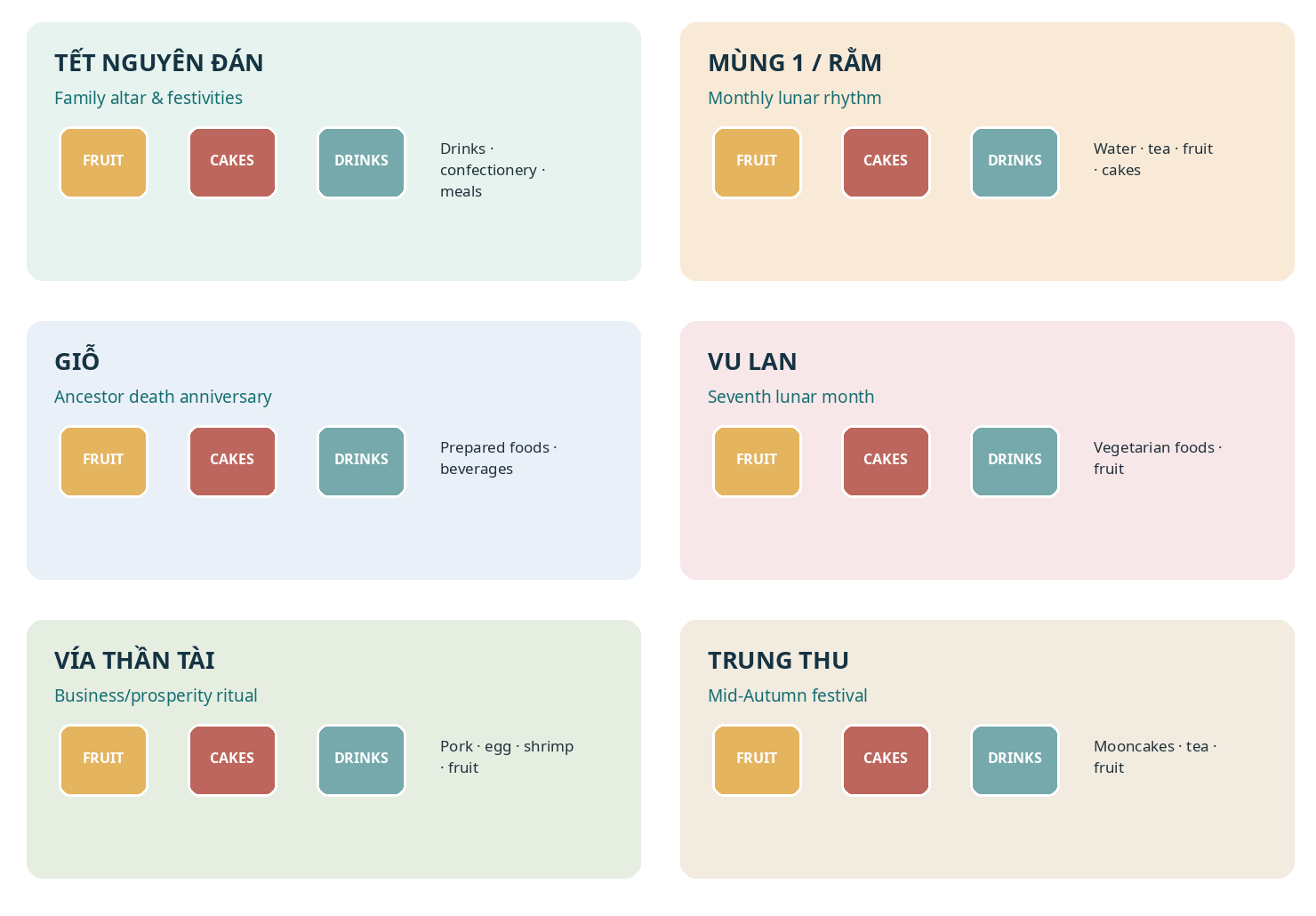
Figure 3. Six principal occasion clusters. Original illustrative cards, not photographs or packshots.
The broadest FMCG basket in the study. Ancestral display, hospitality, gift-giving and ceremonial meals occur together but should be separated analytically.
Categories: Soft drinks, beer, confectionery, biscuits, dried fruit, nuts, cakes, prepared foods, cooking staples.
Relevant brand universe: Coca-Cola, Pepsi, Orion, Kinh Đô, Bibica, Danisa, Vinamit, Lafooco, Vissan, Saigon Co.op, Bia Saigon, Tiger.
Representative products: Coca-Cola cans; ChocoPie; Cosy biscuits; Goody cookie tins; wrapped candies; dried fruit; bánh chưng / bánh tét; chả lụa; ready-made meal trays.
Recurring first and fifteenth lunar-day observances; generally smaller and more frequent purchase baskets than Tết.
Categories: Fruit, bottled water, tea, flowers, sometimes cakes and vegetarian foods.
Relevant brand universe: Aquafina, La Vie, Cozy, regional tea suppliers and locally made cakes.
Representative products: Small water bottles; green/lotus tea; fruit; simple cakes; vegetarian products depending on household.
Household-specific family commemoration that can involve an elaborate meal, guests and remembrance rituals.
Categories: Rice, meat, processed foods, sauces, tea, bottled water, soft drinks, beer, occasionally sweets.
Relevant brand universe: Vissan, Cầu Tre, CHIN-SU, Nam Ngư, Cholimex, Neptune, Coca-Cola, Pepsi, regional beer brands.
Representative products: Chả lụa; chả giò; cooked meat; rice; prepared family dishes; tea and hosting beverages.
Combines Buddhist observance, filial gratitude and ancestor remembrance. Need to distinguish vegetarian household eating from foods placed on an altar.
Categories: Prepared vegetarian meals, tofu, mushrooms, rice dishes, chè, fruit, tea, water.
Relevant brand universe: Local vegetarian specialists and supermarkets; Vifon/Hảo Hảo vegetarian convenience products for adjacent home eating.
Representative products: Vegetarian ceremonial trays, tofu/mushroom dishes, sticky rice, fruit, tea; vegetarian noodles more often consumption products.
Tenth day of the first lunar month; household/business prosperity observance rather than a Buddha offering.
Categories: Pork, eggs, shrimp/crab, fish, fruit, tea, water and prepared offering sets.
Relevant brand universe: Vissan, fresh markets, supermarkets and local preparers; Saigon Co.op’s ready tam sên is directly relevant.
Representative products: Bộ tam sên, roast/boiled meat or fish in some regions, fruit and drinks.
The most product-specialized sweet-cake occasion, involving offerings in some households as well as substantial gifting and family consumption.
Categories: Mooncakes, tea, fruit, gift confectionery.
Relevant brand universe: Kinh Đô, Bibica, Hữu Nghị, Bảo Phương, Givral, Brodard, Như Lan, Đồng Khánh, Đại Phát.
Representative products: Bánh nướng, bánh dẻo; mixed-nut/lotus/mung-bean fillings; gift boxes; tea.
| Occasion | Product mix | Most relevant FMCG competitive lens |
|---|---|---|
| Ông Công Ông Táo | Ceremonial dishes, sticky rice, fruit, cakes, water/tea | Traditional prepared foods, ingredients, local sellers and supermarkets |
| Rằm tháng Giêng | Fruit, tea, water, vegetarian foods, sweets | Water, tea, vegetarian dishes and specialist local foods |
| Phật Đản / Vesak | Fruit, flowers, tea, water, vegetarian food | Bottled water and tea, fruit, vegetarian specialists |
| Đoan Ngọ | Fermented sticky rice, seasonal fruit, traditional cakes | Local/independent specialty producers |
| Khai trương / opening ceremony | Fruit, coconut, flowers, sweets, drinks, sometimes meat dishes | Fresh suppliers, soft drinks, prepared ceremonial sets |
| Routine Thần Tài altar care | Water, tea, fruit, sweets, occasional coffee | Water, tea, coffee and confectionery competitors |
VietnamPlus: Vu Lan ready-made offering and online-delivery demand (August 2026) View source
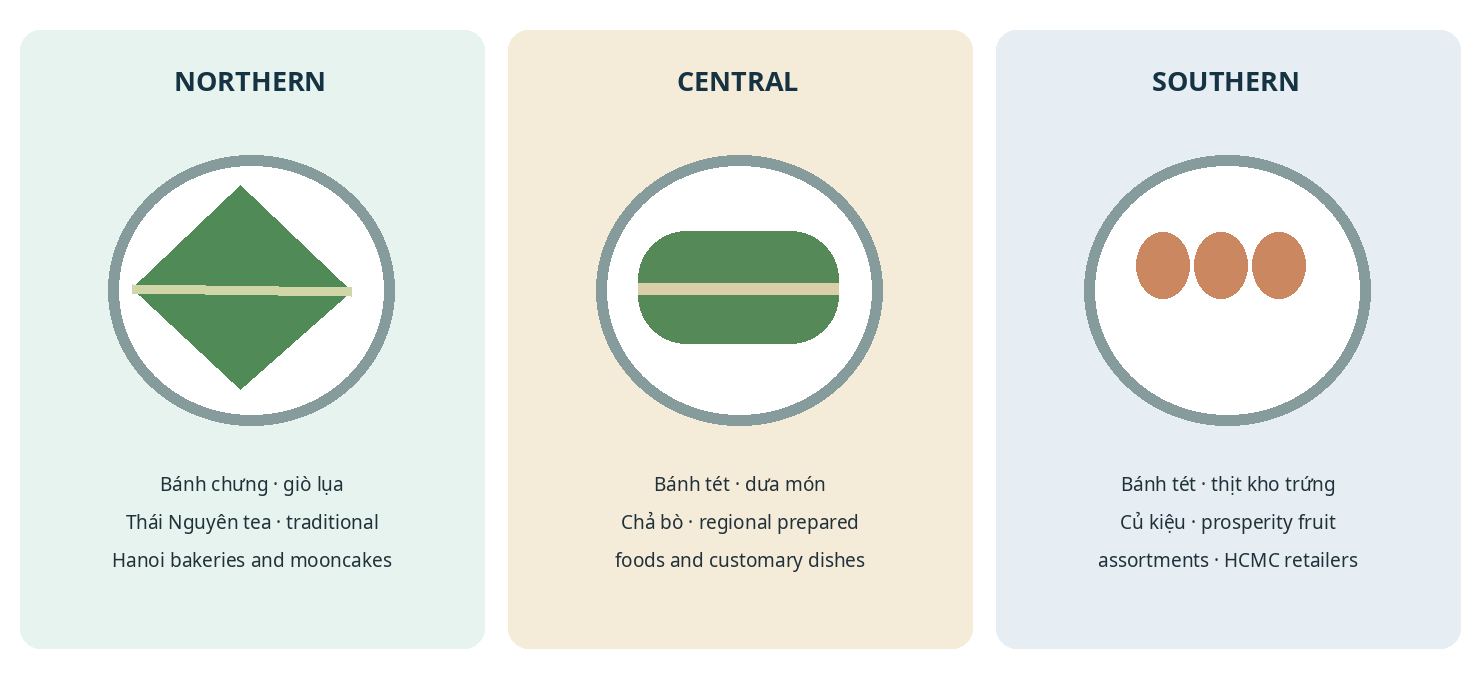
Figure 5. Three regional food repertoires. Schematic illustrations; regional specifics vary by household and province.
| Dimension | North | Central | South |
|---|---|---|---|
| Tết core foods | Bánh chưng, giò lụa, thịt đông, dưa hành | Bánh tét, dưa món, chả bò and local preserves | Bánh tét, thịt kho trứng, củ kiệu, canh khổ qua |
| Fruit displays | Bananas, pomelo, citrus and seasonal fruit | Varies strongly by local supply and custom | Mãng cầu, dừa, đu đủ, xoài in prosperity-themed assortments |
| Tea / coffee | Green tea and Thái Nguyên heritage | Green tea and regional specialties | Tea plus strong coffee/hospitality consumption |
| Packaged sweets | Kinh Đô, Bibica, Hữu Nghị, Hải Hà, Tràng An | National FMCG and local traditional producers | Orion, Kinh Đô, Bibica, Hữu Nghị, imports |
| Mooncakes | Kinh Đô, Hữu Nghị, Bibica, Bảo Phương | National brands and regional bakers | Kinh Đô, Givral, Brodard, Như Lan, Đồng Khánh, Đại Phát |
| Beer at family feasts | Hanoi Beer, Trúc Bạch, Tiger, Heineken | Huda, Larue, Bia Saigon | Bia Saigon, Tiger, 333, Heineken |
| Retail ecosystem | Traditional markets, specialist bakers, supermarkets | Regional specialty sellers and food markets | Traditional markets, supermarkets, ready-prepared trays |
These are regional watchlists, not measured regional ritual-sales rankings. National brands have broad availability, while traditional bakery and fresh-prepared categories are structurally more localized. Local producers can be much more relevant than national leaders for specific dishes.
| Product role | What is actually bought | Example categories / brands | Caution |
|---|---|---|---|
| Direct offering display | Something placed on altar or ceremonial table | Fruit; water; tea; some Coca-Cola and Orion packs | Observed in some homes does not mean a universal rule |
| Ceremonial meal preparation | Ingredients/processed foods prepared and offered | Vissan; Cầu Tre; CHIN-SU; Nam Ngư; cooking oil | Ingredients themselves are often not displayed |
| Post-ceremony hosting | Consumed after ritual by household and guests | Soft drinks; beer; cakes; full meals | Do not count all hosting as direct offerings |
| Occasion-season gifting | Purchased for gifting to family/business contacts | Mooncakes; premium tea; nuts; boxed confectionery | Not necessarily intended for an altar |
A single SKU can participate in multiple roles; for instance, canned beverages could appear on an ancestral altar and later be offered to guests. A single annual occasion may therefore produce overlapping but analytically distinct sales drivers.
Channel follows the item. Fresh altar goods (fruit, flowers, boiled chicken, betel and areca) and votive paper are still bought at wet markets and street vendors, where vendors know the ritual (Hanoi's Chợ Hàng Bè sells boiled chicken with a rose in its beak for mùng 1 and rằm (1st and 15th of the lunar month)). Shelf-stable goods that double as altar items and gifts have moved to supermarkets, minimarkets and e-commerce: 70% of Tết (Lunar New Year) shoppers used supermarkets and 31% wet markets in 2023 (Cimigo via B-Company); 63% say they prioritise e-commerce for Tết 2026, up from 48% in 2024, and Gen Z and Gen Y are the majority of Tết shoppers on Shopee (VnEconomy; VietnamNet). Ready-made trays come from specialist services, restaurants and supermarket pre-orders; no food-app evidence was found. WinMart+ put about 80% of its 764 new 2025 stores in rural areas and reports imported fruit growing there (VnExpress).
Timing runs on two rhythms. Tết (Lunar New Year) is a long ramp: FMCG spend roughly doubles a normal month and peaks about two weeks before Tết; gift baskets peak two to four weeks out; e-commerce peaks 7–10 days out; corporate basket orders run early December to 20 January, family orders from mid lunar December; cooked altar dishes sell out on 27–28 Tết; Co.opmart tray pre-orders close around 22 Chạp for delivery on 29 Tết (Kantar Worldpanel; Metric via Brands Vietnam). Monthly worship is a 24–48 hour spike: votive paper and chicken orders on the 13th–14th, fresh flowers, fruit and chicken before dawn on the day; vendors slaughter from 5 a.m. so shoppers can light incense before work (Tiền Phong). Rằm tháng Bảy (seventh-month full moon) fruit runs about 3x normal from the 9th, votive paper 2–3x from the 12th, vegetarian eateries 2–3x for the month.
Gift sets and the altar are the same SKU set. Saigon Co.op builds its 99,000–199,000 VND own-label baskets explicitly "from altar offerings and family meals": tea, ST25 rice, noodles, seasonings (Tuổi Trẻ). The 300,000–500,000 VND band dominates in 2026; baskets under 500,000 outsell premium; 77% of households received FMCG gifts last Tết (Lunar New Year) with penetration declining; gifting is shifting to practical and health items, and shoppers prefer to pick items and have them packed rather than buy pre-assembled baskets. The custom of placing a received basket on the altar before opening it is widely assumed but was not documented in any source reached.
Who decides. A woman is the "tổng chỉ huy" of Tết (Lunar New Year) shopping in 68% of urban households; elders set what is ritually correct; younger members order online (VnEconomy). 56% will buy at least one ready-made traditional food. Young people are reported offering bubble tea and fried chicken to Ông Địa (Earth God) on the logic that offerings should match what the person eats (Vietcetera).
"Worship lite" is uneven. Votive paper and alcohol are shrinking (clearer in HCMC and at pagodas since the 2018 Sangha letter); fruit, flowers, incense, tea and ready-made food are stable or growing. The 2026 middle path is buying individual ready-made dishes (xôi, chè, giò, vegetarian dumplings) to assemble one's own tray rather than a full tray; Ông Táo (Kitchen Gods) 2026 feast orders were flat while individual-dish purchases rose (VnBusiness).
Ready-made tray services (Đồ Cúng Việt, Đồ Cúng Tâm Linh, Tâm Phúc, Tâm An and others) are HCMC-centred, built on life events (đầy tháng, thôi nôi (baby's first birthday), khai trương (business opening), động thổ (ground-breaking), nhập trạch (housewarming), new car, month 7), ordered by hotline, website and Facebook, delivered free within 30 km, and bundle wine, rice, tea, soft drinks, incense and candles (Toplist). Supermarket trays go back to at least 2006 in HCMC. Users are defined by time scarcity and small households rather than income. Full trays run roughly 260,000 to 1.8 million VND depending on occasion (context only).
The updated research expands the competitive universe while keeping actual ceremonial use separate from seasonal gifting, household popularity and category relevance.
Corrected research · 17 October 2026
The regular basket centres on biscuits, candy, tea, water, rượu trắng (white rice liquor), vegetarian foods and incense. Beer is not a traditional prescribed offering; Tết (Lunar New Year) hosting and gifting sit outside this core. “Most chosen” refers to the cited household panel and year — never a national share of offerings.
Role key: A = altar · G = worship-season gift · H = hosting/shared meal · C = charity. Ingredients may support ceremonial cooking without being displayed.
Leadership is given as the panel or press wording ("most chosen" = Worldpanel Brand Footprint, urban four cities vs rural). Role: A = placed on the altar, G = worship-season gift, H = hosting and the shared meal afterwards, C = charity.
Worship core, used across the regular cycle (daily, mùng 1 and rằm (1st and 15th of the lunar month), giỗ (death anniversary), Buddhist days, Thần Tài (God of Wealth)): biscuits and sponge cakes, candy and sugar, tea, plain water, white rice liquor, rice and xôi, vegetarian packaged food, incense; coffee on Thần Tài altars only. Tết (Lunar New Year) and gifting only: beer, soft drinks, energy drinks, cooking oil, fish sauce and seasonings, instant noodles, dairy, bird's nest. Mooncakes belong to Trung Thu (Mid-Autumn Festival).
| Category | Role | Leading brands and products | Worship-specific products and evidence |
|---|---|---|---|
| Biscuits and confectionery | A, G, H | Mondelez Kinh Đô (Cosy tin 378 g, LU, Oreo, Solite, AFC, Cadbury); Orion (ChocoPie 66 g boxes, Custas, "An" box, first time in urban Top 20 in 2025); Danisa (200 g box, premium Danish, Mayora); Hữu Nghị (Tipo, Goute tin, Daisy, Lộc Xuân sets); Bibica (Phúc sets, gold-bar candy box); Richy Majestic Selection; Hải Hà and Bánh mứt kẹo Hà Nội in the North | Tower guides specify 9 ChocoPie boxes on the ancestral altar; Cosy and Danisa tins described by Shopee as fitting small worship spaces; Kinh Đô Lộc 2026 sets for "hiếu kính tổ tiên"; Orion sets sold as completing the bánh mứt tray |
| Beer | A (towers), G, H | Sabeco: Bia Saigon (fastest-growing urban beverage brand 2025), 333 (rising rural), Sài Gòn Gold; Heineken Vietnam: Tiger (#2 urban beverage 2023), Heineken, Larue (Centre), Bia Việt; Habeco: Bia Hà Nội, Trúc Bạch (North); Carlsberg: Huda (Centre, rising urban 2025); Budweiser | Not a traditional offering: every tray list specifies rượu trắng, the Buddha altar bars alcohol, and the Tết (Lunar New Year) can tower is a recent decoration beside the altar, by colour (333 and Budweiser red, Sài Gòn Gold gold, Heineken green, Tiger Bạc blue); tolerated add-on on Thần Tài (God of Wealth) altars; main role is Tết and giỗ (death anniversary) hosting and gifting (Bia Saigon 63-can and 8-can sets, Bia Hà Nội scratch-code cartons, Tiger tall can) |
| Carbonated soft drinks | A (towers), G, H | Coca-Cola (most chosen beverage, urban and rural); Pepsi, 7Up, Mirinda (Suntory PepsiCo, #1 non-alcoholic company 2024); Sprite, Fanta | Coca-Cola is the only soft drink named in a tower guide (9 red cans); Tết (Lunar New Year) 2025 An/Tài/Lộc swallow cans, Tết 2026 swallow-and-blossom cans; Pepsi gold can 2026; Pepsi +4 cans per carton (2024) |
| Energy drinks | H, G | Sting (#2 urban 2024), Red Bull (#4 rural), Number 1, Wake-Up 247 | Not named in any tower or tray guide |
| Bottled water | A (refill), H | Aquafina, La Vie (both grew in urban 2025 when most beverages fell), Vĩnh Hảo, Dasani, Satori | Altar water is plain water in cups changed daily; no brand evidenced on altars |
| Tea | A (brewed), G | RTD: Tân Hiệp Phát Không Độ and Dr Thanh (implied leader), C2, TEA+ (biggest rural jump 2025); leaf: Thái Nguyên / Tân Cương, Cozy, Shan Tuyết, Phúc Long, Lipton | Dr Thanh cartons marketed as the Tết (Lunar New Year) gift for parents; Shan Tuyết in 2026 baskets; tea packets wrapped in red paper at weddings; no RTD tea on any tray list |
| Coffee | A (Ông Địa cup), G | G7 (#4 urban beverage 2023), Nescafé (#5), Vinacafé, Trung Nguyên (up 3 urban 2025), Maccoffee, Q Café (#2 rural 2025) | The daily Ông Địa (Earth God) coffee cup has no brand attached in any source |
| Rice liquor and wine | A (3 or 5 cups), G | Rượu trắng unbranded; Halico (Vodka Hà Nội, Nếp Mới) in long decline; Vang Đà Lạt; imported Chivas, Johnnie Walker, Ballantine's in premium baskets | Liquor is on every tray but the brand is not; imported bottles appear on some urban altars for "guaranteed quality" |
| Instant noodles | G, C | Hảo Hảo (#1 urban, #2 rural packaged food), Kokomi (#4 rural), 3 Miền (#5 rural), Omachi (growing), Gấu Đỏ, Miliket, Vifon | Egg noodles in Co.op 199,000 VND baskets; noodles plus oil plus rice as month-7 charity packs; not on any cô hồn (wandering spirits) tray list retrieved |
| Cooking oil | G | Simply (only oil in urban Top 5), Neptune, Meizan (Cái Lân), Tường An (KIDO), Cholimex | Tường An oil gift sets; dầu sounds like giàu in the South; oil in every Co.op basket tier |
| Fish sauce and seasonings | G, H | Nam Ngư (#1 rural packaged food), Chin-su (#2 urban, #3 rural; 800,000 new buyers in 2024), Aji-ngon, Knorr, Maggi, Cholimex, Colorman | Chin-su Tết (Lunar New Year) seasoning box, Cholimex "chuẩn đỏ" box, Colorman 9-seasoning set; a bowl of pure fish sauce sits at the centre of the savoury tray, unbranded |
| Rice and sticky rice | A, G | ST25 (World's Best Rice 2025, 5 kg gift bags), Co.op and MM private label, Lộc Trời, Vinaseed | ST25 in Co.op 159,000 VND basket; xôi and bánh chưng bought cooked, not branded |
| Dairy and adult nutrition | G | Vinamilk (#1 urban and rural), TH (#2 urban), Fami (#2 rural), Milo; adult: Ensure Gold (+32% rural 2025), Anlene, Nutricare Gold | Ensure Gold is the Tết (Lunar New Year) and Vu Lan (Buddhist filial-piety day) "gift of health"; Anlene Tết 2026; milk is not an altar item |
| Mooncakes | A, G, H | Kinh Đô (70+ products, Trăng Vàng premium), Orion, Bibica, Givral (South), Hữu Nghị and Hải Hà (North), Thọ Phát (KIDO), Sanest bird's-nest cakes; online: Lâm Thủy, Tân Dân Lợi, Thanh Dung | Online 2025: Kinh Đô 34%, Lâm Thủy 26%, Tân Dân Lợi 18%; 2026 online best-sellers are mochi-style cakes, TikTok Shop about 70% |
| Vegetarian packaged food | A, H | Âu Lạc, Vissan chay, Cầu Tre, SG Food, Song Hương, Phạm Gia, Cholimex, Co.op Select | Vissan há cảo and hoành thánh chay launched for Rằm tháng Bảy (seventh-month full moon) 2026; Co.opmart vegetarian range up about 20% for Vu Lan (Buddhist filial-piety day) |
| Processed and chilled meat | H | Vissan (530 bn VND Tết (Lunar New Year) 2026 stock), CP, CJ Cầu Tre, MEATDeli, Đức Việt | Giò, chả, nem bought ready-made for the tray |
| Sugar and hard candy | A (cô hồn) | Biên Hòa sugar (urban Top 10); candy unbranded (kẹo cau, kẹo dồi, sesame) | 12 sugar cubes and bags of candy on hungry-ghost trays |
| Bird's nest and health gifts | G | Yến sào Khánh Hòa / Sanest, Nunest, Brand's | Sanest mooncake tiers of 2/4/6/9; bird's nest in 500,000+ VND baskets |
| Incense and votive paper | A | Craft villages: Quảng Phú Cầu (Hà Nội), Thủy Xuân (Huế), Lê Minh Xuân (HCMC); agarwood brands Trầm Kỳ, Việt Hương Trầm, Trầm Hương Khánh Hòa; Vinacay herbal | No national most-chosen incense brand; votive paper demand falling in HCMC |
Sources: Brand Footprint 2025; Brand Footprint 2024; Brand Footprint 2023; FPT Shop tower guide; Mytour tower guide; Thời báo Tài chính Tết 2025 shelves; Bách Hóa Xanh seasoning gift sets; Metric mooncakes 2025; Tiền Phong Vu Lan 2026.
Company and product connections from the supplied report; market availability and ritual use are not equivalent.
| Owner | Category | Brands and ranges | Connection to worship occasions |
|---|---|---|---|
| Coca-Cola Vietnam | Carbonated soft drinks, water | Coca-Cola, Fanta, Sprite, Dasani | Red cans photographed on a 2026 Tết (Lunar New Year) ancestor altar; Fanta in the VBA altar scene; named in tower guides; Tết swallow cans |
| Suntory PepsiCo Vietnam | Carbonated soft drinks, energy drinks, water, RTD tea | Pepsi, 7Up, Mirinda, Sting, Aquafina, TEA+ | Tower guides name Pepsi; gold Tết (Lunar New Year) can 2026; Aquafina the likeliest refill water |
| Sabeco | Beer | Bia Saigon, Saigon Chill, Saigon Gold, 333 | Tết (Lunar New Year) and giỗ (death anniversary) hosting and gifting, not a worship offering; Saigon Chill seen once in a Tết altar scene; 333 and Saigon Gold in Tết tower guides |
| Heineken Vietnam | Beer | Tiger, Heineken, Larue, Bia Việt | Tết (Lunar New Year) and giỗ (death anniversary) hosting and gifting, not a worship offering; Tiger Bạc and Heineken in Tết tower guides; Larue in the Centre |
| Habeco | Beer | Bia Hà Nội, Trúc Bạch | Northern feast and Tết (Lunar New Year) hosting beer, not a worship offering; Trúc Bạch seen once in a Tết altar scene |
| Carlsberg Vietnam | Beer | Huda, Halida | Central feast beer; Tết (Lunar New Year) community gifts |
| Tân Hiệp Phát | RTD tea, energy drinks | Trà Xanh Không Độ, Dr Thanh, Number 1 | Dr Thanh cartons marketed as the Tết (Lunar New Year) gift for parents |
| Trung Nguyên Legend | Coffee | G7, Trung Nguyên | G7 box in the VBA altar scene; the only coffee brand with any altar image |
| Nestlé Vietnam | Coffee, dairy, seasonings, water | Nescafé, Milo, Maggi, La Vie, KitKat | Tết (Lunar New Year) "Cầu Đủ Là Được" wish platform; La Vie leads water with Aquafina |
| Mondelez Kinh Đô | Biscuits, confectionery, mooncakes | Kinh Đô, Cosy, Solite, AFC, LU, Oreo, Cadbury; Kinh Đô mooncakes | Lộc sets "for hiếu kính tổ tiên"; Cosy tin described as altar-suited; mooncake reference brand |
| Orion Vina | Packaged cakes, biscuits, snacks | ChocoPie, Custas, Gouté, C'est Bon, "An" box | 66 g ChocoPie boxes are the branded item tower guides specify for the ancestral altar; ChocoPie Watermelon Tết (Lunar New Year) box 16 pieces 448 g |
| Bibica | Confectionery, biscuits, mooncakes | Goody tins, Hura, Cheery, Phát Tài candies, mooncakes | 2026 Tết (Lunar New Year) catalogue of tins, boxes and prosperity-themed candy |
| Hữu Nghị Food | Biscuits, mứt, mooncakes | Tipo, Goute, Daisy, Staff, Lộc Xuân sets | Northern Tết (Lunar New Year) shelf staple |
| Danisa (Mayora) | Biscuits | Danisa blue, gold and red tins | "Tri ân" gratitude platform; 200 g described as the temple-visit size |
| Hải Hà, Tràng An, Bánh mứt kẹo Hà Nội | Confectionery, mứt | Traditional candies and hexagonal mứt boxes | Northern Tết (Lunar New Year) tray and gift |
| Masan Consumer | Fish sauce, seasonings, noodles, energy drinks | Chin-su, Nam Ngư, Omachi, Kokomi, Wake-Up 247 | Seasoning gift boxes; fish sauce on every savoury tray, unbranded |
| Acecook Vietnam | Instant noodles | Hảo Hảo (incl. chay), Vifon competes | Tết (Lunar New Year) basket and charity noodles; not on trays |
| KIDO | Cooking oil, mooncakes, spices | Tường An, Thọ Phát | Oil gift sets (dầu = giàu); spice boxes |
| Cái Lân (Calofic) | Cooking oil | Simply, Neptune, Meizan | Simply the only oil in the urban Top 5; Tết (Lunar New Year) basket staple |
| Ajinomoto, Unilever, Cholimex | Seasonings | Aji-ngon, Knorr, Cholimex | Gift boxes; meal preparation |
| Vissan, CJ Cầu Tre, CP, MEATDeli | Processed and chilled meat, vegetarian | Chả lụa, chả giò, lạp xưởng, chay lines | Ceremonial-meal inputs; Vissan the only named vegetarian launch for Vu Lan (Buddhist filial-piety day) 2026 |
| Âu Lạc, SG Food, Song Hương, Phạm Gia | Vegetarian packaged food | Giò chay, nem chay, há cảo chay | Vu Lan (Buddhist filial-piety day) and rằm (full moon, 15th of the lunar month) trays |
| Vinamilk, TH, Abbott, Fonterra | Dairy, adult nutrition | Vinamilk, Ông Thọ, TH true MILK, Ensure Gold, Anlene | Elder gifting at Tết (Lunar New Year) and Vu Lan (Buddhist filial-piety day) |
| Vinamit, Lafooco, Tân Tân | Dried fruit, nuts | Dried jackfruit, cashews, mixed nuts | Tết (Lunar New Year) gift baskets and snack trays |
| Yến sào Khánh Hòa, Nunest | Bird's nest | Sanest drinks and mooncakes | Premium gifts, Trung Thu (Mid-Autumn Festival) and Tết (Lunar New Year) |
| Craft villages and agarwood brands | Incense | Quảng Phú Cầu, Thủy Xuân, Lê Minh Xuân; Trầm Kỳ, Trầm Hương Khánh Hòa | Every altar; no national brand |
| Saigon Co.op, WinMart, Lotte, MM, Bách Hóa Xanh | Retail private label and prepared food | Co.op, WinEco, MM private label; mâm cỗ gia tiên, tam sên, grilled snakehead, ngũ quả trays | The only products explicitly built and sold "for the offering tray" |
These uncited brand-role claims are retained for field review, separate from the sourced category map. Ownership, prevalence, margins and sales-lift language must not be read as validated evidence.
| Category | Brands and hero SKUs named | Claimed worship role |
|---|---|---|
| Soft pies and sponge cakes | Orion ChocoPie (red "Tình" box, 12 and 24 pack), Orion Custas (gold box), Kinh Đô Solite, Bibica Hura | ChocoPie as the base brick of cake towers; Custas owns the gold colour code |
| Crackers and wafers | Kinh Đô AFC (tall slim box), Oreo wafer roll tins, Tipo | AFC as the middle tier of towers; savoury relieves "sweet fatigue" at thụ lộc |
| Traditional packaged cakes | Rồng Vàng Hoàng Gia bánh đậu xanh (gold cube boxes built into dragons or ingots), Bảo Minh (bánh cốm, bánh chả, bánh phu thê, Hà Nội), Tân Huê Viên bánh pía (Sóc Trăng), Mè xửng Thiên Hương (Huế), Hải Châu | Purpose-built for Buddha and Thần Tài (God of Wealth) altars; regional altar staples |
| Packaged bánh chưng | Saigon Food "Bánh Chưng Sum Vầy" (vacuum pack, about 3-month ambient shelf life, in Co.opmart, AEON, Lotte, 7-Eleven) | Positioned for gifting and altar display; stronger in the South |
| Processed meat | Vissan giò lụa logs 250 g–1 kg (about 18,500 t processed food in 2025); CJ Cầu Tre frozen spring rolls and dumplings; Co.op Select and Lotte Choice L inside retailer trays | Default packaged protein for ancestral trays |
| Vegetarian analogs | Co.op Select chay (most calendar-aligned private label), Cầu Tre chay, Âu Lạc, Phạm Gia / An Nhiên, Cholimex, Minh Hảo | Buddha trays, Vu Lan (Buddhist filial-piety day), mùng 1 and rằm (1st and 15th of the lunar month); 3–4x lifts reported near pagodas |
| Seasonings | Maggi Nấm Hương and Maggi soy sauce with "chay mặn đều dùng được" badges; Knorr, Aji-ngon, Tam Thái Tử; Chin-su Cá Cơm Mùa Xuân glass bottle | Maggi said to own the vegetarian pulse; soy sauce offered on Southern Buddha altars |
| Noodles and porridge | Hảo Hảo Chay Rau Nấm and Omachi cartons beside outdoor altars; Minh Trung Cháo Sen Bát Bảo (canned lotus porridge, red and gold pull-tab) | Noodle cartons as cô hồn (wandering spirits) charity; lotus porridge cans on Buddha altars and as tower tops |
| Candy and jelly | Alpenliebe, Oishi guava candy, Bibica Bốn Mùa, Hải Hà Chew; Long Hải, New Choice, Cherish, Zai Zai jelly cups and pre-moulded jelly towers (pumpkin, ingot, lotus) | Tucked into fruit-tray gaps; near-universal in cô hồn (wandering spirits) offerings; jelly towers engineered for the altar |
| Extruded snacks | Oishi prawn crackers, Poca / Lay's, Orion O'Star and Swing | Master packs of 20–50 mini bags for cô hồn (wandering spirits) and openings |
| Beer | 333 (red-white-gold can, "333" read as Tài-Tài-Tài), Saigon Gold sleek can, Tiger Platinum, Larue (yellow can, Centre and South), Bia Hà Nội red-gold Tết (Lunar New Year) cans | 333 for Thần Tài (God of Wealth) and 3-can mini towers (unconfirmed; traditional Thần Tài lists specify rượu, not beer) |
| Soft drinks and RTD | Coca-Cola with four-character idioms on cans; Mirinda Xá Xị and Chương Dương Sarsi (dark amber, Ông Địa (Earth God) altars in the South); Red Bull gold 250 ml can (daily Thần Tài (God of Wealth), 5-can towers); Trà Bí Đao Wonderfarm (gold-green can, Southern altars); Dr Thanh red label; TEA+ Oolong | Colour, can shape and "energy for the wealth god" logic |
| Water | La Vie, Aquafina, Vĩnh Hảo in 250–350 ml stubby bottles | 500 ml bottles knock over incense on small altars; stubby formats win temple and home-altar cases |
| Coffee | G7 3-in-1 red box, MacCoffee Phố, Birdy and Boss RTD cans, Highlands RTD | RTD cans replacing the brewed morning cup for Ông Địa (Earth God) among younger shopkeepers |
| Health and tonics | Sanest, Yến Việt, Green Bird, Song Yến bird's nest (6-jar red-gold window boxes); Ensure Gold, Vinamilk Sure Prevent, TH true NUT, Fami; KGC red ginseng, cordyceps | Displayed on the altar "like tribute", then consumed by elders; replacing mứt Tết (Lunar New Year) |
| Incense | Nhang Thiên and An Nhiên agarwood (premium, modern trade), craft-village red sticks (mass) | Premium natural lines growing in cities; mass remains fragmented |
Commercial landscape · First draft · October 2026
Photographed use, official seasonal products, ritual-specific retail services and category-relevant candidates carry different kinds of evidence. Broader household popularity does not establish worship leadership.
ChocoPie, Gouté, Custas and C’est Bon straddle shelf-stable household snacking, ceremonial display in selected settings, gifting and family consumption. An official ChocoPie watermelon Tết gift box containing 16 cakes (448 g) is a concrete example of seasonal format architecture.
Orion official: ChocoPie Watermelon Tết gift box View source
Kinh Đô mooncakes sit within a clear annual Trung Thu category; Cosy, Solite and AFC add year-round packaged snack exposure. A brand can therefore participate in both a highly specialized seasonal category and broader everyday sweets buying. Not all of those purchases are religious offerings.
Bibica’s 2026 Tết catalogue separates metal tins, plastic boxes, paper boxes, gift boxes, Goody cookies, Cheery sweets and Phát Tài candies. Examples listed by Bibica include Goody Classic assorted cookie tins in multiple sizes, Cheery fruit-filled hard-candy boxes, and Phát Tài sweets with prosperity-oriented formats. This portfolio provides unusually clear product-level evidence of seasonal specialization.
Bibica official: 2026 Tết product catalogue View source
G7 3in1, Pure Black and other ready-portioned coffee products belong primarily to beverage use and household hospitality, but photographed branded coffee on a Tết altar demonstrates an additional possible display role. The evidence supports presence in some settings, not a universal tradition.
Vissan’s packaged meat universe is relevant to preparation of ceremonial family meals. Saigon Co.op has explicit evidence of occasion-specific products, including ancestral offering trays in vegetarian and non-vegetarian versions, and ready-prepared tam sên. In contrast with packaged snacks, these products directly address assembling the ritual meal.
Saigon Co.op official/public-sector description of 2025 seasonal assortments View source
| Occasion | Brand / supplier | Named product or assortment | Evidence designation |
|---|---|---|---|
| Tết altar | Coca-Cola | Coca-Cola red canned beverage | Observed in published altar photograph |
| Tết altar | Orion / assorted packaged snacks | ChocoPie, Gouté-type packaged cakes | Product category / photographed historical example |
| Tết altar | Fanta, G7, Saigon Chill, Trúc Bạch | Branded cans and coffee packs | Observed in published 2026 ceremony image |
| Tết gift/hosting | Orion | ChocoPie Watermelon Tết 16-piece, 448 g | Verified official seasonal product |
| Tết gifting | Bibica | Goody Classic cookie tins | Verified official 2026 portfolio |
| Tết sweets | Bibica | Cheery candy, Phát Tài candy | Verified official 2026 portfolio |
| Tết ancestral meal | Saigon Co.op | Ready ancestor meal tray, vegetarian/savoury | Verified occasion-specific retail offer, 2025 |
| Thần Tài | Saigon Co.op | Ready tam sên assortment | Verified occasion-specific retail assortment |
| Giỗ meal | Vissan / Cầu Tre | Chả lụa, chả giò, processed foods | Category-relevant product candidate |
| Rằm / monthly | Aquafina / La Vie | Still drinking-water bottles | Category-relevant product candidate |
| Vu Lan | Local vegetarian specialists | Prepared vegetarian offering trays | Documented category demand; fragmented suppliers |
| Vu Lan home eating | Vifon / Hảo Hảo | Vegetarian noodles / mushroom pho | Adjacent consumption, not confirmed offering |
| Trung Thu | Kinh Đô / Bibica | Baked and soft mooncakes | Occasion category leadership candidates |
| Trung Thu, HCMC | Givral / Brodard / Như Lan | Traditional and premium mooncake gift boxes | Established local brands / broader seasonal trade |
| Company / brand owner | Brands / ranges | Competitive connection |
|---|---|---|
| Coca-Cola Vietnam | Coca-Cola, Fanta, Sprite, Dasani | Branded drinks; occasional altar displays; hospitality |
| Suntory PepsiCo Vietnam | Pepsi, 7UP, Mirinda, Aquafina, Sting | Soft drinks and water; Tết/household consumption |
| Mondelez Kinh Do | Kinh Đô, Cosy, Solite, AFC, Oreo | Biscuits, cakes and mooncakes |
| Orion Vina | ChocoPie, Gouté, Custas, C’est Bon | Packaged cakes, biscuits, gift boxes |
| Bibica | Goody, Hura, Cheery, Phát Tài, mooncakes | Confectionery, cookies, festival season products |
| Hữu Nghị Food | Hữu Nghị, Tipo, mooncakes | Biscuits, bakery snacks, mooncakes |
| Trung Nguyên Legend | G7, Trung Nguyên Legend | Instant coffee, gifts, guests |
| Nestlé Vietnam | Nescafé, Milo, MAGGI | Coffee, family consumption, cooking ingredients |
| Vinamilk | Vinamilk, Ông Thọ, Ngôi Sao Phương Nam | Dairy and prepared-dessert ingredients |
| Vissan | Fresh and processed meat products | Traditional ceremonial meal input |
| Masan Consumer | CHIN-SU, Nam Ngư, Omachi | Sauces, meal ingredients, noodles |
| Acecook Vietnam | Hảo Hảo (including vegetarian variants) | Convenience vegetarian eating |
| Vinamit | Vinamit dried fruit | Dried fruit and seasonal gifting |
| Lafooco | Lafooco nuts | Cashews, mixed nuts, gifts |
| Saigon Co.op | Co.op products, prepared-food services | Ready ritual assortments and meal trays |
Two photographed 2026 settings are especially useful. A VietnamPlus Tết ancestor altar photograph visibly includes red Coca-Cola cans alongside fruit and other products. A Vietnam Beer–Alcohol–Beverage Association report shows an altar arrangement containing branded beverages and packaged food, including Fanta, Trúc Bạch beer, Saigon Chill beer and a G7 coffee box. These images demonstrate real placement, but do not reveal national penetration or brand share.
| Documented setting | Observed product types | What can be concluded |
|---|---|---|
| VietnamPlus, ancestor altar, Tết 2026 | Coca-Cola cans and other packaged goods near fruit and ceramic altar ware | Direct evidence of branded soft drinks in one household display |
| Vietnam beverage association, Tết 2026 | Fanta, beer cans, G7 box, packaged biscuits/cakes | Direct evidence of multiple modern FMCG categories in one ceremonial context |
| Saigon Co.op, Tết 2025 | Ready-prepared ancestor meals, vegetarian versions, pre-prepared fresh food; tam sên | Direct retailer commercialization of occasion-specific offerings |
| VietnamPlus, Vu Lan 2026 | Rising supplies of fruit, flowers, sticky rice, sweets, vegetarian food and ready-made offerings in Hanoi | Evidence of active specialist seasonal demand, not quantified branded share |
Photo evidence: VietnamPlus ancestral altar (February 2026) View source
Photo evidence: Vietnam Beverage Association illustrated report (February 2026) View source
Retail evidence: Saigon Co.op government announcement (January 2025) View source
The links above open the original published photographs and retail case evidence. Photographic images are not reproduced here; embedded figures are original analytical illustrations.
The following is a working market universe organised by FMCG category. It combines established broad-category brands with product lines relevant to the consumption context. “Example products” are portfolio signals, not a definitive exhaustive SKU census.
| Category | Brand universe | Example product lines / formats | Occasion role |
|---|---|---|---|
| Carbonated soft drinks | Coca-Cola; Pepsi; Fanta; Sprite; 7UP; Mirinda | Coca-Cola Original Taste cans; Pepsi Cola; Fanta Orange; 7UP; Mirinda Orange | Tết display in some homes; family hospitality and feasts |
| Bottled water | Aquafina; La Vie; Dasani; i-on Life | Still water in small PET bottles, 350–600 ml; larger household formats | Routine water offerings, monthly observances, temple visits |
| Traditional tea | Cozy; Phúc Long; Vinatea; regional Thái Nguyên tea | Green tea; jasmine tea; lotus tea; tea bags; loose-leaf tea | Ancestral remembrance, monthly lunar rites, family hospitality |
| Coffee | G7 / Trung Nguyên; Nescafé; Vinacafé; Highlands Coffee | G7 3in1; G7 Pure Black; Nescafé 3in1; packaged instant coffee | Some contemporary ancestor altars; guests and gifts |
| Biscuits and cookies | Kinh Đô / Cosy; Orion; Bibica; Danisa; Richy; Hữu Nghị; Nabati; Mayora | Cosy Marie; Orion Gouté; Bibica Goody; butter-cookie tins; wafer boxes | Tết displays, sweets, family sharing and gifts |
| Packaged sponge cakes | Orion; Kinh Đô; Bibica; Hữu Nghị | ChocoPie; Custas; C’est Bon; Solite; Hura; Tipo | Documented packaged-cake altar use and household sharing |
| Confectionery | Bibica; Hải Hà; Tràng An; Alpenliebe; Mentos; Chupa Chups | Wrapped assortments; Cheery; Phát Tài; seasonal tins and jars | Tết candy trays, offerings in some homes, gifting |
| Mooncakes | Kinh Đô; Bibica; Hữu Nghị; Givral; Brodard; Như Lan; Bảo Phương | Baked/soft mooncakes; lotus; mung bean; mixed nuts; premium gift boxes | Trung Thu offerings, family sharing and gifts |
| Dried fruit | Vinamit; regional specialty producers; private labels | Dried jackfruit; banana; mango; mixed-fruit boxes | Tết gifting and hospitality; some displays |
| Nuts and seeds | Lafooco; Tân Tân; private labels; imports | Cashews; peanuts; almonds; sunflower seeds; mixed nuts | Tết gifts and household snack trays |
| Processed meat / foods | Vissan; Cầu Tre; local/supermarket prepared foods | Chả lụa; chả giò; lạp xưởng; marinated meat; fresh ceremonial foods | Tết ancestor meals and giỗ preparation |
| Vegetarian convenience | Acecook / Hảo Hảo; Vifon; vegetarian specialists | Vegetarian noodles; mushroom pho; tofu; ready-prepared chay dishes | Buddhist vegetarian eating and Vu Lan; direct trays often local |
| Cooking staples | CHIN-SU; Nam Ngư; MAGGI; Cholimex; Neptune; Simply; Meizan | Fish sauce; soy sauce; cooking oil; seasonings; chilli sauce | Indirect input to ceremony meal preparation |
| Dairy / nutrition | Vinamilk; TH true MILK; Dutch Lady; Milo | UHT milk; flavoured milk; nutrition drinks | Family gathering and hospitality; peripheral altar role |
| Beer | Bia Saigon; Tiger; Heineken; Hanoi Beer; Trúc Bạch; Huda; Larue | Saigon Lager; Saigon Special; Saigon Chill; 333; Tiger; Heineken | Tết/giỗ feasts, some ancestor or folk displays |
| Fresh fruit | Unbranded growers/traders; WinEco; Co.op; premium fruit retailers | Bananas; pomelos; oranges; apples; mangoes; coconuts; region-specific sets | Fundamental direct offering category, fragmented branding |
Brand notes: Coca-Cola’s documented category prominence comes from Worldpanel household choice data; Bibica and Orion product-specific listings are verified through their official portfolio pages. Fresh fruit and traditional prepared foods remain largely fragmented.
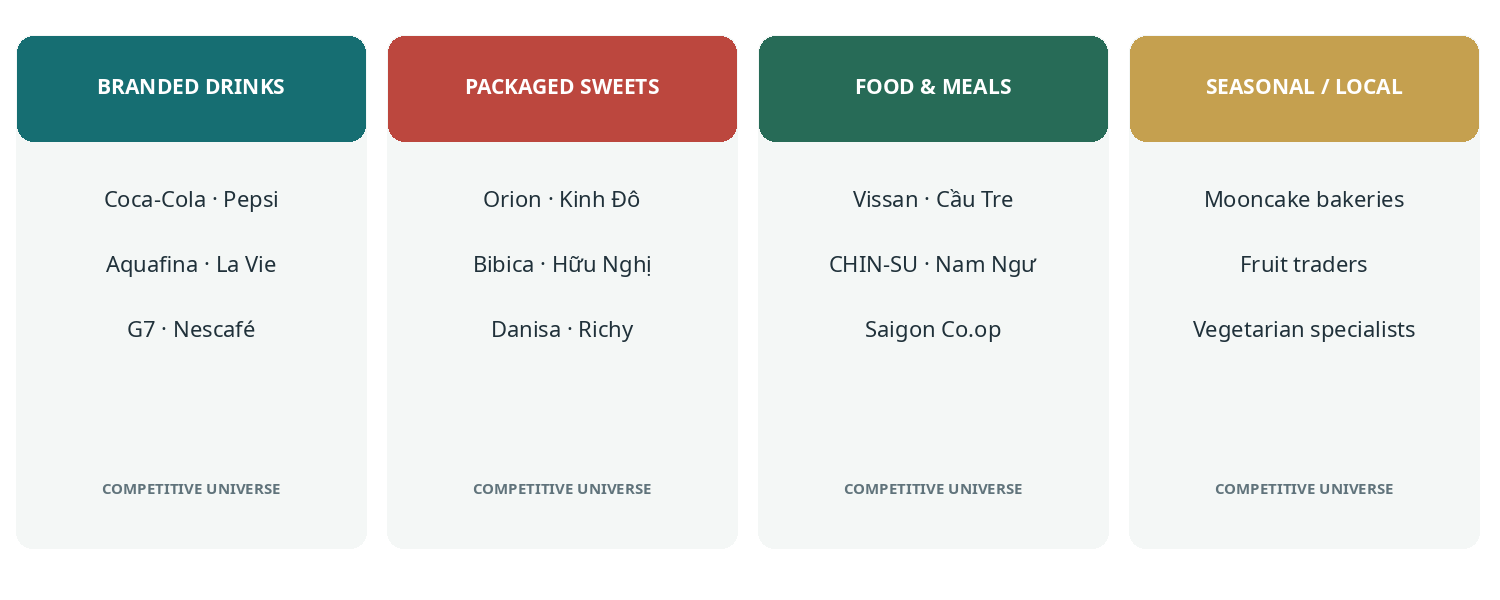
Figure 2. Competitive universes by category role. Brand names illustrate relevance and are not rankings of ritual sales.
Coca-Cola was the most chosen beverage brand across Kantar’s Urban 4 and rural Vietnam panels in the 2023 ranking; Tiger and Bia Saigon were significant urban and rural beverage brands respectively, and G7 and Nescafé appeared in the urban beverage ranking. This is broader household-purchase evidence, not ceremony-specific leadership.
Worldpanel / Kantar Vietnam Brand Footprint 2023 View source
Worldpanel 2025 national FMCG overview View source
ChocoPie, Gouté, Custas and C’est Bon straddle shelf-stable household snacking, ceremonial display in selected settings, gifting and family consumption. An official ChocoPie watermelon Tết gift box containing 16 cakes (448 g) is a concrete example of seasonal format architecture.
Orion official: ChocoPie Watermelon Tết gift box View source
Kinh Đô mooncakes sit within a clear annual Trung Thu category; Cosy, Solite and AFC add year-round packaged snack exposure. A brand can therefore participate in both a highly specialized seasonal category and broader everyday sweets buying. Not all of those purchases are religious offerings.
Bibica’s 2026 Tết catalogue separates metal tins, plastic boxes, paper boxes, gift boxes, Goody cookies, Cheery sweets and Phát Tài candies. Examples listed by Bibica include Goody Classic assorted cookie tins in multiple sizes, Cheery fruit-filled hard-candy boxes, and Phát Tài sweets with prosperity-oriented formats. This portfolio provides unusually clear product-level evidence of seasonal specialization.
Bibica official: 2026 Tết product catalogue View source
G7 3in1, Pure Black and other ready-portioned coffee products belong primarily to beverage use and household hospitality, but photographed branded coffee on a Tết altar demonstrates an additional possible display role. The evidence supports presence in some settings, not a universal tradition.
Vissan’s packaged meat universe is relevant to preparation of ceremonial family meals. Saigon Co.op has explicit evidence of occasion-specific products, including ancestral offering trays in vegetarian and non-vegetarian versions, and ready-prepared tam sên. In contrast with packaged snacks, these products directly address assembling the ritual meal.
Saigon Co.op official/public-sector description of 2025 seasonal assortments View source
| Company / brand owner | Brands / ranges | Competitive connection |
|---|---|---|
| Coca-Cola Vietnam | Coca-Cola, Fanta, Sprite, Dasani | Branded drinks; occasional altar displays; hospitality |
| Suntory PepsiCo Vietnam | Pepsi, 7UP, Mirinda, Aquafina, Sting | Soft drinks and water; Tết/household consumption |
| Mondelez Kinh Do | Kinh Đô, Cosy, Solite, AFC, Oreo | Biscuits, cakes and mooncakes |
| Orion Vina | ChocoPie, Gouté, Custas, C’est Bon | Packaged cakes, biscuits, gift boxes |
| Bibica | Goody, Hura, Cheery, Phát Tài, mooncakes | Confectionery, cookies, festival season products |
| Hữu Nghị Food | Hữu Nghị, Tipo, mooncakes | Biscuits, bakery snacks, mooncakes |
| Trung Nguyên Legend | G7, Trung Nguyên Legend | Instant coffee, gifts, guests |
| Nestlé Vietnam | Nescafé, Milo, MAGGI | Coffee, family consumption, cooking ingredients |
| Vinamilk | Vinamilk, Ông Thọ, Ngôi Sao Phương Nam | Dairy and prepared-dessert ingredients |
| Vissan | Fresh and processed meat products | Traditional ceremonial meal input |
| Masan Consumer | CHIN-SU, Nam Ngư, Omachi | Sauces, meal ingredients, noodles |
| Acecook Vietnam | Hảo Hảo (including vegetarian variants) | Convenience vegetarian eating |
| Vinamit | Vinamit dried fruit | Dried fruit and seasonal gifting |
| Lafooco | Lafooco nuts | Cashews, mixed nuts, gifts |
| Saigon Co.op | Co.op products, prepared-food services | Ready ritual assortments and meal trays |
This practical reference separates products photographed in ceremonies or explicitly sold as ritual solutions from brands whose category portfolio makes them relevant but whose ritual use has not been independently measured.
| Occasion | Brand / supplier | Named product or assortment | Evidence designation |
|---|---|---|---|
| Tết altar | Coca-Cola | Coca-Cola red canned beverage | Observed in published altar photograph |
| Tết altar | Orion / assorted packaged snacks | ChocoPie, Gouté-type packaged cakes | Product category / photographed historical example |
| Tết altar | Fanta, G7, Saigon Chill, Trúc Bạch | Branded cans and coffee packs | Observed in published 2026 ceremony image |
| Tết gift/hosting | Orion | ChocoPie Watermelon Tết 16-piece, 448 g | Verified official seasonal product |
| Tết gifting | Bibica | Goody Classic cookie tins | Verified official 2026 portfolio |
| Tết sweets | Bibica | Cheery candy, Phát Tài candy | Verified official 2026 portfolio |
| Tết ancestral meal | Saigon Co.op | Ready ancestor meal tray, vegetarian/savoury | Verified occasion-specific retail offer, 2025 |
| Thần Tài | Saigon Co.op | Ready tam sên assortment | Verified occasion-specific retail assortment |
| Giỗ meal | Vissan / Cầu Tre | Chả lụa, chả giò, processed foods | Category-relevant product candidate |
| Rằm / monthly | Aquafina / La Vie | Still drinking-water bottles | Category-relevant product candidate |
| Vu Lan | Local vegetarian specialists | Prepared vegetarian offering trays | Documented category demand; fragmented suppliers |
| Vu Lan home eating | Vifon / Hảo Hảo | Vegetarian noodles / mushroom pho | Adjacent consumption, not confirmed offering |
| Trung Thu | Kinh Đô / Bibica | Baked and soft mooncakes | Occasion category leadership candidates |
| Trung Thu, HCMC | Givral / Brodard / Như Lan | Traditional and premium mooncake gift boxes | Established local brands / broader seasonal trade |
The background report found no mainstream brand explicitly marketing “để cúng” (for offering) across the campaigns reviewed. The latest research adds ancestor-gratitude language and offering-oriented retailer baskets; the earlier finding remains limited to its original source set.
| Occasion | What brands do | Examples | What is unclaimed |
|---|---|---|---|
| Tết (Lunar New Year) | Red and gold packs, swallow and blossom motifs, Lộc / An / Phúc naming, gift sets, wish mechanics, CSR | Coca-Cola golden-swallow cans (15+ years) and gold-cap promotion; Kinh Đô "Lộc 2026" sets for "hiếu kính tổ tiên" (the most explicit ancestor reference found); Orion "Tết (Lunar New Year) An" sets marketed as completing the bánh mứt tray; Danisa gratitude platform and three tin editions; Bia Saigon gold-ingot case (2022) and 63-province cans (2022, 2025); Bia Hà Nội scratch-code cartons (2026); Nestlé "Cầu Đủ Là Được" built on the wish ritual; Tường An, Chin-su, Hảo Hảo, Vinamilk reunion-meal spots | Altar permission itself; the can tower; "hiếu" is almost unused at Tết (Lunar New Year) |
| Vu Lan (Buddhist filial-piety day) / month 7 | Filial-piety films; vegetarian SKUs; pagoda sampling via Sangha CSR | Ensure Gold annual TVCs 2021–2024; Nguyên Xuân shampoo 2024 record event with the Sangha as CSR partner and 500,000 samples at pagodas; Vissan vegetarian dumplings 2026 at -20%; Co.opmart vegetarian range +20% for the month | Any food or beverage filial-piety platform; branded hungry-ghost items |
| Thần Tài (God of Wealth) | Gold retail and fintech own the day; supermarkets add grilled snakehead and tam sên | PNJ record 4,649bn VND revenue in Feb 2024 (+63%); Bách Hóa Xanh grilled about 13,400 snakehead across 132 stores in 2026; MoMo 100 half-chỉ gold prizes | No FMCG brand ties to Thần Tài (God of Wealth) or Ông Địa (Earth God); candy, coffee and cigarettes sit on the tray unbranded |
| Openings and life events | Tray services assemble unbranded kits | Đồ Cúng Việt, Tâm Linh, Tâm Phúc; Saigon Co.op occasion sets | No brand–tray-service partnership found |
| Products "for the altar" | Retailers sell trays, five-fruit sets, frozen offering sets | Saigon Co.op mâm cỗ gia tiên since Tết (Lunar New Year) 2019; Lotte Mart 9-dish set; WinMart ritual-tray lines +20% in Tết 2026, sweet spot 600,000–700,000 VND; MM Mega Market says offering goods earn little margin but pull traffic | No brand labels a pack "bánh cúng" or "để cúng" |
Peace
Enough
Gratitude
Blessing
Filial piety
Campaign outcomes are brand- or agency-claimed unless stated. Photos of branded products on altars are anecdotal, not penetration data. The report flags advertising-law and cultural-respect risks; festive colours alone do not establish ritual permission.
Visual evidence & references
Styled retailer reference
Red and yellow cake boxes become structural units in a styled Tết (Lunar New Year) decoration; not evidence of the regular worship basket.
Shopee BlogStyled retailer reference
Slim cans, flowers and fans form recent Tết (Lunar New Year) decorations; not traditional prescribed offerings or evidence of regular ritual demand.
Shopee BlogProduct reference
Rồng Vàng Minh Ngọc’s golden pack arrangement makes the display format part of the product.
Source: Rồng Vàng Minh Ngọc · supplied document
Brands circle the altar with codes and let shoppers make the connection. Across 20+ campaign sources from 2019 to 2026, no mainstream brand uses "cúng", "bàn thờ" or "để cúng" in its public marketing. The explicit altar layer belongs to retailers, tray services and small online sellers.
Sources for the table: Brands Vietnam on Coca-Cola's swallow; Diễn đàn Doanh nghiệp on Kinh Đô Lộc 2026; SGGP on Orion Tết An; VietNamNet on Bia Saigon Gold; Brands Vietnam on Ensure Gold Vu Lan; Brands Vietnam on Nguyên Xuân; VnBusiness on PNJ; Thương hiệu & Công luận on supermarket offering lines; VnExpress on frozen trays. Campaign results are brand- or agency-claimed unless stated.
The codes are moving. Reunion (đoàn viên, sum vầy) is still the default theme but social discussion of it fell from 36.6 million to 8.2 million mentions, and 2024–2026 campaigns pivot to "an" (peace), "đủ" (enough), "tri ân" (gratitude) and "hứng khởi" (uplift) as Gen Z redefines a good Tết (Lunar New Year) as "đủ" rather than "to" (Brands Vietnam BuzzSpeak; Brands Vietnam Tết 2026 round-up). Red, gold, swallow and blossom now run across biscuits, soft drinks, shampoo and coffee cups and no longer differentiate; differentiation in 2025–2026 came from mechanics (personalised wishes, gold caps, scratch codes, AI films).
The risk envelope is regulatory rather than religious. Coca-Cola's "Mở lon Việt Nam" (2019) was ruled a breach of the Advertising Law's fine-customs clause and replaced within days; Huda heritage billboards were pulled on the same clause. The Sangha's 2018 letter and 2019 circular target votive paper at temples, and the Sangha's accepted brand route is charity and gifts, as the Nguyên Xuân partnership shows (Nhà Đầu Tư). Tết (Lunar New Year) is roughly 20% of annual FMCG revenue and higher in confectionery and beer (Việt Nam News).
Photographic evidence of brands on altars exists but is anecdotal. A 2026 VietnamPlus feature on Tết (Lunar New Year) ancestor worship shows red Coca-Cola cans on a household altar beside the fruit tray (VietnamPlus); a Vietnam Beverage Association piece on drinks in Tết culture pictures Fanta, Trúc Bạch and Bia Saigon, G7 coffee and other packaged drinks in a festive altar scene (VBA). These are single instances, not penetration data. Coca-Cola's own 2026 Tết launch material describes swallow, blossom and prosperity motifs and never mentions the altar (Coca-Cola Vietnam). Claims in consultant reports that beer and cola brands include tower-building kits inside festive cartons, and that altar bundles are sold through GrabMart or ShopeeFood, were not confirmed by any source in this research.
The corrected commercial reading alongside the updated background observations. Propositions to investigate, not ranked opportunities or a quantified business case.
Corrected research · 17 October 2026
The report calls these “white space”. They are missing or limited named-brand evidence in the reviewed sources, not validated whitespace, unowned demand or recommended priorities. Household-wide claims and frequency estimates still need field checks.
RESEARCH QUESTION 01
The Thần Tài (God of Wealth) altar. Refreshed twice daily in every shop; coffee, cigarettes, candy, beer and soft drinks are standard; no coffee, confectionery or beverage brand is attached to it in any source. Modern retail has only entered with fresh fish and tam sên sets.
RESEARCH QUESTION 02
Monthly mùng 1 and rằm (1st and 15th of the lunar month). Twenty-four dates a year, 24–48 hour spikes, no packaged brand named by any retailer or press report; supermarkets compete only on fruit traceability.
RESEARCH QUESTION 03
Life-event trays. HCMC tray services bundle liquor, tea, soft drinks, sweets, incense and candles for openings, housewarmings and baby rites, all unbranded; no brand partnership with a tray service was found.
RESEARCH QUESTION 04
The Tết (Lunar New Year) altar tower. A recent, Tết-only decoration built by consumers and assemblers from whichever red or gold can or box is at hand; no brand has claimed the format or the count. It is the smallest of these spaces because it is one occasion a year and sits beside the altar, not on the tray.
RESEARCH QUESTION 05
The vegetarian tray outside Vu Lan (Buddhist filial-piety day). Phật Đản (Buddha's Birthday), Rằm tháng Giêng (first full moon of the year), monthly chay days and the 49-day mourning period are vegetarian occasions where only Vissan and Âu Lạc are ever named, and only for Vu Lan.
RESEARCH QUESTION 06
Hungry-ghost offerings. A mass-volume, single-serve, give-away occasion every month in the South and nationally in month 7, served entirely by unbranded candy, popcorn and sugar.
RESEARCH QUESTION 07
Incense. Village supply with no national most-chosen brand; the one ritual category that is inherently branded elsewhere in Asia.
RESEARCH QUESTION 08
"Hiếu" and ancestor gratitude at Tết (Lunar New Year). Kinh Đô ("hiếu kính tổ tiên") and Danisa ("tri ân") are the only major brands within reach of the altar in their language; the retailer private label is the only product explicitly built "for the offering tray".
The updated report names Kinh Đô’s “hiếu kính tổ tiên” language and retailer baskets explicitly built for offerings. This develops the earlier campaign reading rather than proving that one brand owns the ritual.
Stated as what the evidence shows is unowned, not as recommendations.
The Thần Tài (God of Wealth) altar. Refreshed twice daily in every shop; coffee, cigarettes, candy, beer and soft drinks are standard; no coffee, confectionery or beverage brand is attached to it in any source. Modern retail has only entered with fresh fish and tam sên sets.
Monthly mùng 1 and rằm (1st and 15th of the lunar month). Twenty-four dates a year, 24–48 hour spikes, no packaged brand named by any retailer or press report; supermarkets compete only on fruit traceability.
Life-event trays. HCMC tray services bundle liquor, tea, soft drinks, sweets, incense and candles for openings, housewarmings and baby rites, all unbranded; no brand partnership with a tray service was found.
The Tết (Lunar New Year) altar tower. A recent, Tết-only decoration built by consumers and assemblers from whichever red or gold can or box is at hand; no brand has claimed the format or the count. It is the smallest of these spaces because it is one occasion a year and sits beside the altar, not on the tray.
The vegetarian tray outside Vu Lan (Buddhist filial-piety day). Phật Đản (Buddha's Birthday), Rằm tháng Giêng (first full moon of the year), monthly chay days and the 49-day mourning period are vegetarian occasions where only Vissan and Âu Lạc are ever named, and only for Vu Lan.
Hungry-ghost offerings. A mass-volume, single-serve, give-away occasion every month in the South and nationally in month 7, served entirely by unbranded candy, popcorn and sugar.
Incense. Village supply with no national most-chosen brand; the one ritual category that is inherently branded elsewhere in Asia.
"Hiếu" and ancestor gratitude at Tết (Lunar New Year). Kinh Đô ("hiếu kính tổ tiên") and Danisa ("tri ân") are the only major brands within reach of the altar in their language; the retailer private label is the only product explicitly built "for the offering tray".
What is already crowded: the Tết (Lunar New Year) red-gold-swallow code, the 300,000–500,000 VND gift basket, Trung Thu (Mid-Autumn Festival) gift boxes, and adult-nutrition gifts to parents (Ensure Gold, Anlene). Caution carried over from the main report: the compliance line is the Advertising Law's fine-customs clause (Coca-Cola "Mở lon Việt Nam", 2019), and the Sangha's accepted brand route into worship spaces is charity and gifts.
Commercial landscape · First draft · October 2026
The draft’s strategic reading. These are qualitative research directions, not a priority ranking or quantified opportunity estimate.
ARENA 01
Coca-Cola and some other FMCG drinks have genuine photographed evidence of direct Tết altar presence, but the robust broad market ranking is about household purchasing rather than worship. Separate traditional tea/water offering occasions from more elaborate annual and folk ceremonial displays.
ARENA 02
Orion, Kinh Đô, Bibica and Hữu Nghị have broad product breadth across year-round snacks, annual festivals and family sharing. Bibica’s official 2026 Tết catalogue provides granular proof of tins, gifting boxes and prosperity-themed confectionery.
ARENA 03
This landscape is shared by national processed-food brands, wet markets, traditional prepared-food businesses and supermarkets. Saigon Co.op’s meal-tray services show that this need can be packaged into a directly occasion-specific retail proposition.
ARENA 04
The commercial universe includes fresh local vegetarian dish specialists, supermarkets, tofu and mushroom suppliers, and convenience-food brands. Inference must remain disciplined: a widely sold vegetarian instant noodle is not automatically an altar offering, although it may be part of associated food consumption.
ARENA 05
A more fragmented competition set. Established mooncake manufacturers are highly visible, while fresh fruit, traditional cakes and ceremonial specialties frequently rely on independent and regional businesses. Gift consumption and ritual usage overlap but are not synonymous.
• No public source reviewed establishes a national share-of-offering ranking for Coca-Cola, Orion, Kinh Đô or other major brands; reported broader category leadership must not be relabelled as religious-occasion leadership.
• Ritual practice varies among Buddhism, ancestor worship and folk-deity offerings, across regions and households. Meat and alcoholic drinks do not belong in an undifferentiated “Buddhist offerings” assortment.
• Some listed categories are adjacent to ritual activity rather than altar-displayed products: cooking ingredients, dairy, vegetarian convenience foods and most festive hospitality purchases.
• The heatmap is a structured qualitative assessment; it is not quantitative share, sales, weighted distribution, incidence, or ranking data.
• Brand and product examples indicate market participation or availability at the time of research; individual SKUs and seasonal packaging may change.
Coca-Cola and some other FMCG drinks have genuine photographed evidence of direct Tết altar presence, but the robust broad market ranking is about household purchasing rather than worship. Separate traditional tea/water offering occasions from more elaborate annual and folk ceremonial displays.
Orion, Kinh Đô, Bibica and Hữu Nghị have broad product breadth across year-round snacks, annual festivals and family sharing. Bibica’s official 2026 Tết catalogue provides granular proof of tins, gifting boxes and prosperity-themed confectionery.
This landscape is shared by national processed-food brands, wet markets, traditional prepared-food businesses and supermarkets. Saigon Co.op’s meal-tray services show that this need can be packaged into a directly occasion-specific retail proposition.
The commercial universe includes fresh local vegetarian dish specialists, supermarkets, tofu and mushroom suppliers, and convenience-food brands. Inference must remain disciplined: a widely sold vegetarian instant noodle is not automatically an altar offering, although it may be part of associated food consumption.
A more fragmented competition set. Established mooncake manufacturers are highly visible, while fresh fruit, traditional cakes and ceremonial specialties frequently rely on independent and regional businesses. Gift consumption and ritual usage overlap but are not synonymous.
Worship is a near-universal, calendar-fixed demand driver that no FMCG brand currently addresses by name. 95% of homes, 86% offering food or drink yearly, a fortnightly rhythm, and two annual peaks on dates known years ahead. The altar vocabulary is owned by retailers and tray services.
The planning calendar is lunar with a solar overlay. Tết (Lunar New Year) packaged-goods demand builds four to six weeks out and peaks two weeks out; corporate baskets are decided three to four months ahead with retailers; monthly worship compresses into 24–48 hours around the 1st and 15th, with pre-dawn availability of fresh items the constraint. The weekday a lunar date falls on moves the shopping day.
Two opposite worship shopping modes exist and should not be conflated. Ancestral, Thần Tài (God of Wealth) and Tết (Lunar New Year) purchases premiumise (brand-up, tins, imports for "guaranteed quality", ritual counts, label-out display). Hungry-ghost purchases economise for volume (cheap, many small units, outdoor, given away, never brought indoors).
Confectionery and biscuits are the most altar-ready packaged category: a standing line item on every tray list, tin formats described by retailers as suited to small worship spaces, individually wrapped pieces for sharing afterwards, and the top gifted category at Tết (Lunar New Year). Counterfeit anxiety (Danisa) shows that brand trust is part of altar eligibility.
Beer and soft drinks are Tết (Lunar New Year) hosting and gifting categories, not worship offerings; they reach the altar only as consumer-built Tết towers placed beside it, which reward one brand, 9–11 units, 330ml cans and red or gold liveries, and the brand face is the decoration. The 6-pack is weak for drinking but is the base tier of a tower. Beer on the ancestral altar is accepted as modern, not traditional; traditional lists specify three cups of rice liquor. A bowl of plain water must always be present regardless.
The Thần Tài (God of Wealth) altar is the most consumer-goods-friendly and the most frequent: refreshed twice a day in every shop, with coffee, cigarettes, bananas, candy, beer and soft drinks standard rather than tolerated, and lộc consumed by owner and staff only. No coffee or confectionery brand is attached to it, and the cult is spreading from South to North.
Oil, fish sauce, seasonings, milk and instant noodles have a gifting and charity role, not an altar role. Oil carries a lucky pun (dầu / giàu) in the South; sugar, rice and salt are on every tray. Instant noodles on hungry-ghost trays are widely assumed but did not appear in any of about ten tray guides retrieved; treat as unconfirmed.
Fruit eligibility is decided by region and by name, and supermarkets are winning altar fruit on traceability rather than price. Imported apples and pears pass in the North and fail in the South.
Vegetarian is the growth edge of the ritual basket. Buddha and Vu Lan (Buddhist filial-piety day) trays are strictly vegetarian; tray makers see 8–10x normal orders in month 7; retailers widen vegetarian ranges by about 20%; Hanoi buyers prefer natural ingredients while HCMC buyers crowd mock-meat. Vissan is the only confirmed branded vegetarian Vu Lan launch found.
Votive paper and alcohol are the shrinking parts of the basket; fruit, flowers, incense, tea and ready-made food are stable or growing; buying individual ready-made dishes to self-assemble a tray is the 2026 middle path and favours branded components over full-tray services.
The gift basket and the altar tray are the same SKU set, and retailers already design entry-tier baskets from altar items. Gifting is shifting to practical and health items under 500,000 VND; the custom of placing a received gift on the altar before opening is assumed but undocumented.
Codes that still carry: an (peace), đủ (enough), tri ân (gratitude), lộc (blessing), hiếu (filial piety, nearly unused at Tết (Lunar New Year) and the most direct unclaimed bridge to the altar). Red, gold, swallow and blossom are now table stakes. The compliance line is the Advertising Law's fine-customs clause, not religious objection; the Sangha's sanctioned route into worship spaces is charity and gifts.
No measured monthly participation rate, Gen Z altar ownership, brand association for “để cúng” (for offering), or validated marketplace-review vocabulary. No confirmed brand–tray-service partnership. Central Vietnam remains thinly covered.
These are observations from the evidence, stated so a category team can decide what to do with them.
Worship is a near-universal, calendar-fixed demand driver that no FMCG brand currently addresses by name. 95% of homes, 86% offering food or drink yearly, a fortnightly rhythm, and two annual peaks on dates known years ahead. The altar vocabulary is owned by retailers and tray services.
The planning calendar is lunar with a solar overlay. Tết (Lunar New Year) packaged-goods demand builds four to six weeks out and peaks two weeks out; corporate baskets are decided three to four months ahead with retailers; monthly worship compresses into 24–48 hours around the 1st and 15th, with pre-dawn availability of fresh items the constraint. The weekday a lunar date falls on moves the shopping day.
Two opposite worship shopping modes exist and should not be conflated. Ancestral, Thần Tài (God of Wealth) and Tết (Lunar New Year) purchases premiumise (brand-up, tins, imports for "guaranteed quality", ritual counts, label-out display). Hungry-ghost purchases economise for volume (cheap, many small units, outdoor, given away, never brought indoors).
Confectionery and biscuits are the most altar-ready packaged category: a standing line item on every tray list, tin formats described by retailers as suited to small worship spaces, individually wrapped pieces for sharing afterwards, and the top gifted category at Tết (Lunar New Year). Counterfeit anxiety (Danisa) shows that brand trust is part of altar eligibility.
Beer and soft drinks are Tết (Lunar New Year) hosting and gifting categories, not worship offerings; they reach the altar only as consumer-built Tết towers placed beside it, which reward one brand, 9–11 units, 330ml cans and red or gold liveries, and the brand face is the decoration. The 6-pack is weak for drinking but is the base tier of a tower. Beer on the ancestral altar is accepted as modern, not traditional; traditional lists specify three cups of rice liquor. A bowl of plain water must always be present regardless.
The Thần Tài (God of Wealth) altar is the most consumer-goods-friendly and the most frequent: refreshed twice a day in every shop, with coffee, cigarettes, bananas, candy, beer and soft drinks standard rather than tolerated, and lộc consumed by owner and staff only. No coffee or confectionery brand is attached to it, and the cult is spreading from South to North.
Oil, fish sauce, seasonings, milk and instant noodles have a gifting and charity role, not an altar role. Oil carries a lucky pun (dầu / giàu) in the South; sugar, rice and salt are on every tray. Instant noodles on hungry-ghost trays are widely assumed but did not appear in any of about ten tray guides retrieved; treat as unconfirmed.
Fruit eligibility is decided by region and by name, and supermarkets are winning altar fruit on traceability rather than price. Imported apples and pears pass in the North and fail in the South.
Vegetarian is the growth edge of the ritual basket. Buddha and Vu Lan (Buddhist filial-piety day) trays are strictly vegetarian; tray makers see 8–10x normal orders in month 7; retailers widen vegetarian ranges by about 20%; Hanoi buyers prefer natural ingredients while HCMC buyers crowd mock-meat. Vissan is the only confirmed branded vegetarian Vu Lan launch found.
Votive paper and alcohol are the shrinking parts of the basket; fruit, flowers, incense, tea and ready-made food are stable or growing; buying individual ready-made dishes to self-assemble a tray is the 2026 middle path and favours branded components over full-tray services.
The gift basket and the altar tray are the same SKU set, and retailers already design entry-tier baskets from altar items. Gifting is shifting to practical and health items under 500,000 VND; the custom of placing a received gift on the altar before opening is assumed but undocumented.
Codes that still carry: an (peace), đủ (enough), tri ân (gratitude), lộc (blessing), hiếu (filial piety, nearly unused at Tết (Lunar New Year) and the most direct unclaimed bridge to the altar). Red, gold, swallow and blossom are now table stakes. The compliance line is the Advertising Law's fine-customs clause, not religious objection; the Sangha's sanctioned route into worship spaces is charity and gifts.
Two further observations from the consolidated reports, both practitioner-level rather than survey-backed: compact formats fit the apartment altar that young urban households now keep, so pack height and footprint are part of altar eligibility; and families report a post-ritual burden of sugary cakes and sodas accumulated from the altar, which is one reason gifting has moved toward tea, nuts, low-sugar biscuits and health items.
Gaps this report could not close: no survey of how many households offer every mùng 1 and rằm (1st and 15th of the lunar month); no Gen Z altar-ownership figure; no retailer disclosure of monthly rằm (full moon, 15th of the lunar month) fruit and flower uplift; no brand-association data for "để cúng"; no marketplace review text retrieved (terms listed above need checking against actual reviews); no documented brand–tray-service partnership; Central Vietnam thinly covered on shopping behaviour.
Original source links and Vietnamese vocabulary from the supplied report. Supplied photographs are research references, credited to their publishers; reproduction rights are not verified, and photographs do not establish brand penetration.
01. VietnamPlus | Photograph of Coca-Cola on a Tết ancestor altar | February 2026 — Open
02. Vietnam Beer–Alcohol–Beverage Association | Branded offerings photograph | February 2026 — Open
03. Vietnam Pictorial / VNA | Traditional Tết ancestral altar photograph | February 2026 — Open
04. VietnamPlus | Hanoi Vu Lan prepared offerings and delivery | August 2026 — Open
05. Saigon Co.op | Ready ancestral offering trays | January 2025 — Open
06. Saigon Co.op | Ready tam sên and ancestral sets | December 2024 — Open
07. Orion Vina | Official ChocoPie Tết Watermelon gift product — Open
08. Bibica | Official 2026 Tết cookies and confectionery catalogue — Open
09. Worldpanel | Vietnam Brand Footprint 2025 — Open
10. Kantar Worldpanel | Vietnam beverage brands 2023 — Open
11. Vietnam Beverage Association | Tết 2026 beverage assortments and brand packs — Open
12. Regional offerings / giỗ meal preparation imagery | Điện Máy Xanh — Open
13. Vu Lan illustrative vegetarian feast photo | FPT Shop — Open
14. Givral 2026 | Available seasonal catalogue via distributor — Open
Corrected research · 17 October 2026
Worship in Vietnam is a year-round, high-frequency practice, and its packaged-goods basket is small and stable: biscuits and sponge cakes, candy, tea, plain water, white rice liquor, xôi and chè, vegetarian packaged food, and incense. These are what go on the ancestral altar on mùng 1 and rằm (1st and 15th of the lunar month), at giỗ (death anniversary), at Vu Lan (Buddhist filial-piety day) and Rằm tháng Giêng (first full moon of the year), on the Buddha altar, and on the Thần Tài (God of Wealth) altar every morning. In these categories the leaders are Orion (ChocoPie, Custas), Mondelez Kinh Đô (Cosy, Solite, AFC), Danisa, Bibica and Hữu Nghị in cakes and biscuits; Thái Nguyên and Cozy leaf tea, with Tân Hiệp Phát's Dr Thanh and Không Độ in RTD; Aquafina and La Vie as the water households refill from; unbranded rượu trắng; Âu Lạc, Vissan chay, Cầu Tre and Co.op Select in vegetarian; and craft-village incense with no national brand (Brand Footprint 2025; Brand Footprint 2024).
Tết (Lunar New Year) is the exception, not the pattern. It is the one occasion where beer, soft drinks, cooking oil, seasonings, dairy and imported goods enter the picture, mostly as gifts and hosting stock, and where retailers sell private-label baskets built "for the offering tray and the reunion meal" (Tuổi Trẻ). Beer in particular has no place in traditional worship: every tray list specifies cups of rượu trắng, the Buddha altar bars alcohol, and the beer or soft-drink can tower is described by the guides that teach it as "không phải phong tục truyền thống", a recent Tết decoration placed beside the altar that doubles as guest stock (FPT Shop). Beer and soft drinks should be read as Tết hosting and gifting categories with a decorative altar footnote, plus a tolerated add-on on Thần Tài (God of Wealth) altars.
Two things frame the rest. No brand owns any worship occasion: the only branded items guides specify are ChocoPie boxes and Coca-Cola cans for Tết (Lunar New Year) towers, and nothing at all for the fortnightly, daily and life-event rites, which are the higher-frequency ones. And the biggest worship-day purchases are fresh and unbranded (boiled chicken, xôi, chè, fruit, flowers, grilled snakehead, roast pork), so packaged brands reach the altar through the biscuit box, the candy bag, the tea packet, the vegetarian tray and the incense bundle, not through the main tray. Region matters most in beer and sweets and least in sauces, noodles, soft drinks and dairy; occasion matters most for vegetarian brands and mooncakes, the only two moments where sources name a packaged brand as the worship purchase.
One product can play four roles in the same occasion, and they are different competitive sets: a direct offering placed on the altar (fruit, water, tea, a sealed can or box); a ceremonial-meal input that is cooked and then offered (Vissan, Cầu Tre, Chin-su, Nam Ngư, cooking oil, never displayed as such); post-ceremony hosting (beer and soft-drink cartons, cakes, the shared meal); and occasion gifting (mooncakes, tea, nuts, boxed confectionery, which may never reach an altar). Counting every Tết (Lunar New Year) can or every mooncake as a worship purchase double-counts; the tables below mark which role each brand actually plays.
Oct 17, 2026 · @consensys
Worship in Vietnam is a year-round, high-frequency practice, and its packaged-goods basket is small and stable: biscuits and sponge cakes, candy, tea, plain water, white rice liquor, xôi and chè, vegetarian packaged food, and incense. These are what go on the ancestral altar on mùng 1 and rằm (1st and 15th of the lunar month), at giỗ (death anniversary), at Vu Lan (Buddhist filial-piety day) and Rằm tháng Giêng (first full moon of the year), on the Buddha altar, and on the Thần Tài (God of Wealth) altar every morning. In these categories the leaders are Orion (ChocoPie, Custas), Mondelez Kinh Đô (Cosy, Solite, AFC), Danisa, Bibica and Hữu Nghị in cakes and biscuits; Thái Nguyên and Cozy leaf tea, with Tân Hiệp Phát's Dr Thanh and Không Độ in RTD; Aquafina and La Vie as the water households refill from; unbranded rượu trắng; Âu Lạc, Vissan chay, Cầu Tre and Co.op Select in vegetarian; and craft-village incense with no national brand (Brand Footprint 2025; Brand Footprint 2024).
Tết (Lunar New Year) is the exception, not the pattern. It is the one occasion where beer, soft drinks, cooking oil, seasonings, dairy and imported goods enter the picture, mostly as gifts and hosting stock, and where retailers sell private-label baskets built "for the offering tray and the reunion meal" (Tuổi Trẻ). Beer in particular has no place in traditional worship: every tray list specifies cups of rượu trắng, the Buddha altar bars alcohol, and the beer or soft-drink can tower is described by the guides that teach it as "không phải phong tục truyền thống", a recent Tết decoration placed beside the altar that doubles as guest stock (FPT Shop). Beer and soft drinks should be read as Tết hosting and gifting categories with a decorative altar footnote, plus a tolerated add-on on Thần Tài (God of Wealth) altars.
Two things frame the rest. No brand owns any worship occasion: the only branded items guides specify are ChocoPie boxes and Coca-Cola cans for Tết (Lunar New Year) towers, and nothing at all for the fortnightly, daily and life-event rites, which are the higher-frequency ones. And the biggest worship-day purchases are fresh and unbranded (boiled chicken, xôi, chè, fruit, flowers, grilled snakehead, roast pork), so packaged brands reach the altar through the biscuit box, the candy bag, the tea packet, the vegetarian tray and the incense bundle, not through the main tray. Region matters most in beer and sweets and least in sauces, noodles, soft drinks and dairy; occasion matters most for vegetarian brands and mooncakes, the only two moments where sources name a packaged brand as the worship purchase.
One product can play four roles in the same occasion, and they are different competitive sets: a direct offering placed on the altar (fruit, water, tea, a sealed can or box); a ceremonial-meal input that is cooked and then offered (Vissan, Cầu Tre, Chin-su, Nam Ngư, cooking oil, never displayed as such); post-ceremony hosting (beer and soft-drink cartons, cakes, the shared meal); and occasion gifting (mooncakes, tea, nuts, boxed confectionery, which may never reach an altar). Counting every Tết (Lunar New Year) can or every mooncake as a worship purchase double-counts; the tables below mark which role each brand actually plays.
Leadership is given as the panel or press wording ("most chosen" = Worldpanel Brand Footprint, urban four cities vs rural). Role: A = placed on the altar, G = worship-season gift, H = hosting and the shared meal afterwards, C = charity.
Worship core, used across the regular cycle (daily, mùng 1 and rằm (1st and 15th of the lunar month), giỗ (death anniversary), Buddhist days, Thần Tài (God of Wealth)): biscuits and sponge cakes, candy and sugar, tea, plain water, white rice liquor, rice and xôi, vegetarian packaged food, incense; coffee on Thần Tài altars only. Tết (Lunar New Year) and gifting only: beer, soft drinks, energy drinks, cooking oil, fish sauce and seasonings, instant noodles, dairy, bird's nest. Mooncakes belong to Trung Thu (Mid-Autumn Festival).
| Category | Role | Leading brands and products | Worship-specific products and evidence |
|---|---|---|---|
| Biscuits and confectionery | A, G, H | Mondelez Kinh Đô (Cosy tin 378 g, LU, Oreo, Solite, AFC, Cadbury); Orion (ChocoPie 66 g boxes, Custas, "An" box, first time in urban Top 20 in 2025); Danisa (200 g box, premium Danish, Mayora); Hữu Nghị (Tipo, Goute tin, Daisy, Lộc Xuân sets); Bibica (Phúc sets, gold-bar candy box); Richy Majestic Selection; Hải Hà and Bánh mứt kẹo Hà Nội in the North | Tower guides specify 9 ChocoPie boxes on the ancestral altar; Cosy and Danisa tins described by Shopee as fitting small worship spaces; Kinh Đô Lộc 2026 sets for "hiếu kính tổ tiên"; Orion sets sold as completing the bánh mứt tray |
| Beer | A (towers), G, H | Sabeco: Bia Saigon (fastest-growing urban beverage brand 2025), 333 (rising rural), Sài Gòn Gold; Heineken Vietnam: Tiger (#2 urban beverage 2023), Heineken, Larue (Centre), Bia Việt; Habeco: Bia Hà Nội, Trúc Bạch (North); Carlsberg: Huda (Centre, rising urban 2025); Budweiser | Not a traditional offering: every tray list specifies rượu trắng, the Buddha altar bars alcohol, and the Tết (Lunar New Year) can tower is a recent decoration beside the altar, by colour (333 and Budweiser red, Sài Gòn Gold gold, Heineken green, Tiger Bạc blue); tolerated add-on on Thần Tài (God of Wealth) altars; main role is Tết and giỗ (death anniversary) hosting and gifting (Bia Saigon 63-can and 8-can sets, Bia Hà Nội scratch-code cartons, Tiger tall can) |
| Carbonated soft drinks | A (towers), G, H | Coca-Cola (most chosen beverage, urban and rural); Pepsi, 7Up, Mirinda (Suntory PepsiCo, #1 non-alcoholic company 2024); Sprite, Fanta | Coca-Cola is the only soft drink named in a tower guide (9 red cans); Tết (Lunar New Year) 2025 An/Tài/Lộc swallow cans, Tết 2026 swallow-and-blossom cans; Pepsi gold can 2026; Pepsi +4 cans per carton (2024) |
| Energy drinks | H, G | Sting (#2 urban 2024), Red Bull (#4 rural), Number 1, Wake-Up 247 | Not named in any tower or tray guide |
| Bottled water | A (refill), H | Aquafina, La Vie (both grew in urban 2025 when most beverages fell), Vĩnh Hảo, Dasani, Satori | Altar water is plain water in cups changed daily; no brand evidenced on altars |
| Tea | A (brewed), G | RTD: Tân Hiệp Phát Không Độ and Dr Thanh (implied leader), C2, TEA+ (biggest rural jump 2025); leaf: Thái Nguyên / Tân Cương, Cozy, Shan Tuyết, Phúc Long, Lipton | Dr Thanh cartons marketed as the Tết (Lunar New Year) gift for parents; Shan Tuyết in 2026 baskets; tea packets wrapped in red paper at weddings; no RTD tea on any tray list |
| Coffee | A (Ông Địa cup), G | G7 (#4 urban beverage 2023), Nescafé (#5), Vinacafé, Trung Nguyên (up 3 urban 2025), Maccoffee, Q Café (#2 rural 2025) | The daily Ông Địa (Earth God) coffee cup has no brand attached in any source |
| Rice liquor and wine | A (3 or 5 cups), G | Rượu trắng unbranded; Halico (Vodka Hà Nội, Nếp Mới) in long decline; Vang Đà Lạt; imported Chivas, Johnnie Walker, Ballantine's in premium baskets | Liquor is on every tray but the brand is not; imported bottles appear on some urban altars for "guaranteed quality" |
| Instant noodles | G, C | Hảo Hảo (#1 urban, #2 rural packaged food), Kokomi (#4 rural), 3 Miền (#5 rural), Omachi (growing), Gấu Đỏ, Miliket, Vifon | Egg noodles in Co.op 199,000 VND baskets; noodles plus oil plus rice as month-7 charity packs; not on any cô hồn (wandering spirits) tray list retrieved |
| Cooking oil | G | Simply (only oil in urban Top 5), Neptune, Meizan (Cái Lân), Tường An (KIDO), Cholimex | Tường An oil gift sets; dầu sounds like giàu in the South; oil in every Co.op basket tier |
| Fish sauce and seasonings | G, H | Nam Ngư (#1 rural packaged food), Chin-su (#2 urban, #3 rural; 800,000 new buyers in 2024), Aji-ngon, Knorr, Maggi, Cholimex, Colorman | Chin-su Tết (Lunar New Year) seasoning box, Cholimex "chuẩn đỏ" box, Colorman 9-seasoning set; a bowl of pure fish sauce sits at the centre of the savoury tray, unbranded |
| Rice and sticky rice | A, G | ST25 (World's Best Rice 2025, 5 kg gift bags), Co.op and MM private label, Lộc Trời, Vinaseed | ST25 in Co.op 159,000 VND basket; xôi and bánh chưng bought cooked, not branded |
| Dairy and adult nutrition | G | Vinamilk (#1 urban and rural), TH (#2 urban), Fami (#2 rural), Milo; adult: Ensure Gold (+32% rural 2025), Anlene, Nutricare Gold | Ensure Gold is the Tết (Lunar New Year) and Vu Lan (Buddhist filial-piety day) "gift of health"; Anlene Tết 2026; milk is not an altar item |
| Mooncakes | A, G, H | Kinh Đô (70+ products, Trăng Vàng premium), Orion, Bibica, Givral (South), Hữu Nghị and Hải Hà (North), Thọ Phát (KIDO), Sanest bird's-nest cakes; online: Lâm Thủy, Tân Dân Lợi, Thanh Dung | Online 2025: Kinh Đô 34%, Lâm Thủy 26%, Tân Dân Lợi 18%; 2026 online best-sellers are mochi-style cakes, TikTok Shop about 70% |
| Vegetarian packaged food | A, H | Âu Lạc, Vissan chay, Cầu Tre, SG Food, Song Hương, Phạm Gia, Cholimex, Co.op Select | Vissan há cảo and hoành thánh chay launched for Rằm tháng Bảy (seventh-month full moon) 2026; Co.opmart vegetarian range up about 20% for Vu Lan (Buddhist filial-piety day) |
| Processed and chilled meat | H | Vissan (530 bn VND Tết (Lunar New Year) 2026 stock), CP, CJ Cầu Tre, MEATDeli, Đức Việt | Giò, chả, nem bought ready-made for the tray |
| Sugar and hard candy | A (cô hồn) | Biên Hòa sugar (urban Top 10); candy unbranded (kẹo cau, kẹo dồi, sesame) | 12 sugar cubes and bags of candy on hungry-ghost trays |
| Bird's nest and health gifts | G | Yến sào Khánh Hòa / Sanest, Nunest, Brand's | Sanest mooncake tiers of 2/4/6/9; bird's nest in 500,000+ VND baskets |
| Incense and votive paper | A | Craft villages: Quảng Phú Cầu (Hà Nội), Thủy Xuân (Huế), Lê Minh Xuân (HCMC); agarwood brands Trầm Kỳ, Việt Hương Trầm, Trầm Hương Khánh Hòa; Vinacay herbal | No national most-chosen incense brand; votive paper demand falling in HCMC |
Sources: Brand Footprint 2025; Brand Footprint 2024; Brand Footprint 2023; FPT Shop tower guide; Mytour tower guide; Thời báo Tài chính Tết 2025 shelves; Bách Hóa Xanh seasoning gift sets; Metric mooncakes 2025; Tiền Phong Vu Lan 2026.
| Occasion | Frequency | Packaged categories on the altar | Brands and products that show up |
|---|---|---|---|
| Daily altar care (home) | Every day | Water refills, incense, occasional tea | Aquafina and La Vie for refilling; craft-village incense; no brand on the altar itself |
| Thần Tài – Ông Địa (shops) | Twice daily; fuller tray on mùng 1 (1st of the lunar month), rằm (full moon, 15th of the lunar month) and the 10th | Water, tea, rượu trắng, coffee, single cakes and candy, cigarettes; soft drinks and beer only in modern lists | Unbranded in every source; G7 is the one coffee pack seen in an altar photo |
| Mùng 1 and rằm (ancestral and Buddha altars) | 24 dates a year | Biscuit or cake boxes, candy, tea, water, rượu trắng, incense; vegetarian food for Buddhist households | Bánh kẹo is a standing item on monthly lists; ChocoPie, Custas, Solite, Cosy, AFC fit the format; vegetarian brands Âu Lạc, Vissan chay, Cầu Tre, Co.op Select |
| Monthly cô hồn (South, traders) | 2nd and 16th of each lunar month | Bags of candy and biscuits, popcorn, sugar cubes, 3 cups water, 30 ml liquor | Unbranded; cheap single-serve snacks fit |
| Giỗ (death anniversaries) | Several a year per household | Tea, rượu trắng or the deceased's favourite drink, cakes and fruit; ceremonial-meal inputs | Vissan and Cầu Tre giò, chả, chả giò for the meal; tea packets as condolence gifts |
| Rằm tháng Giêng (first full moon of the year) | Annual | Vegetarian food, cakes, tea, incense | Vegetarian product demand reported; no brand named |
| Phật Đản (15/4) | Annual | Vegetarian sets, water, flowers | Vegetarian trays online and at markets; no brand named |
| Vu Lan (Buddhist filial-piety day) / Rằm tháng Bảy (seventh-month full moon) | Annual, plus the month-long cô hồn (wandering spirits) period | Buddha tray strictly vegetarian with plain water; ancestor tray; outdoor cô hồn (wandering spirits) tray with candy, sugar, popcorn | Vissan há cảo and hoành thánh chay (2026), Âu Lạc, Cầu Tre, SG Food; Co.opmart vegetarian range up about 20%; charity packs of noodles, oil, rice |
| Trung Thu (Mid-Autumn Festival) | Annual | Mooncakes on the tray | Kinh Đô, Orion, Bibica, Givral, Hữu Nghị; online Lâm Thủy, Tân Dân Lợi |
| Openings, nhập trạch (housewarming), đầy tháng (baby's first month), cúng xe (vehicle blessing) | As needed | Xôi, chè, tea, rượu, cakes and candy | Unbranded kits from HCMC tray services |
| Tết (Lunar New Year) | Annual | The same core plus a decorative can or box tower beside the altar | Gifting and hosting dominate (see the Readout); not the worship pattern |
The high-frequency rites (daily, Thần Tài (God of Wealth), mùng 1 and rằm (1st and 15th of the lunar month), monthly cô hồn (wandering spirits), giỗ (death anniversary)) carry the most offering occasions and have no brand attached in any source; vegetarian brands at Vu Lan (Buddhist filial-piety day) and mooncakes at Trung Thu (Mid-Autumn Festival) are the only places a packaged brand is named as the worship purchase (Thương hiệu & Công luận; Mytour monthly offerings; Bách Hóa Xanh cô hồn guide; Tiền Phong Vu Lan 2026).
| Parameter | North (Hà Nội, Red River) | Central (Huế, Đà Nẵng) | South (HCMC, Mekong) |
|---|---|---|---|
| Beer (feasts and Tết (Lunar New Year) hosting, not offerings) | Habeco Bia Hà Nội, Trúc Bạch (about half the regional market, 2016, the latest split found) | Carlsberg Huda, Halida; Heineken's Larue | Sabeco Bia Saigon, 333, Sài Gòn Gold; Tiger, Heineken; South is about 59% of national beer consumption |
| Confectionery names on Tết (Lunar New Year) shelves | Hữu Nghị (Tipo, Daisy, Lộc Xuân), Hải Hà, Bánh mứt kẹo Hà Nội mứt boxes, plus national Kinh Đô, Orion, Bibica | Huế bánh in, bánh đậu xanh, mè xửng, mứt gừng Kim Long | Kinh Đô, Bibica, Givral; bánh pía Sóc Trăng |
| Noodles and sauces | Kokomi and 3 Miền strong in rural rankings (rural is the proxy; no North/South split published) | — | Hảo Hảo; Nam Ngư and Chin-su national |
| Tea and liquor | Thái Nguyên / Tân Cương leaf, Cozy; Vodka Hà Nội, Nếp Mới | Shan Tuyết and highland teas | Bảo Lộc tea, Phúc Long; rượu Gò Đen, Bàu Đá (Bình Định) |
| Incense | Quảng Phú Cầu village | Thủy Xuân (Huế) village | Lê Minh Xuân (Bình Chánh) village |
| Fruit on the altar | Green banana, pomelo or phật thủ, persimmon, mandarin, kumquat; imported apples and pears accepted | No fixed set; dragon fruit, banana, watermelon, pineapple | Mãng cầu, dừa, đu đủ, xoài, sung; banana, orange, pear, apple avoided |
| Signature worship foods | Gà luộc, bánh chưng, xôi gấc, chè bà cốt, live carp at Ông Táo (Kitchen Gods) | Duck at Đoan Ngọ (Double Fifth Festival), bánh in, royal-style small dishes | Cá lóc nướng, heo quay, tam sên, bánh tét, thịt kho trứng, chè trôi nước |
| Thần Tài (God of Wealth) and business altars | Novelty gold-shaped bakery for Thần Tài (God of Wealth) day; practice spreading north | Mixed | Daily coffee and cigarettes for Ông Địa (Earth God); monthly 2nd and 16th outdoor trays; giật cô hồn (grabbing the wandering-spirit offerings) |
| Shopping channel for worship | Wet markets strongest (Hàng Bè chicken with rose), chợ online via Facebook and Zalo | Markets | Supermarket combos and tray services most developed; vàng mã declining fastest |
Urban vs rural is the better-documented split for packaged goods. Urban packaged-food leaders are Hảo Hảo and Chin-su; rural leaders are Nam Ngư, Hảo Hảo, Chin-su, Kokomi, 3 Miền and Simply. Urban beverage leaders are Coca-Cola, Sting, Aquafina, C2, La Vie and Bia Saigon; rural are Coca-Cola, Q Café, Red Bull, Pepsi, Mirinda and 333. Vinamilk leads dairy everywhere; TH is #2 urban and Fami #2 rural. Imported fruit is growing in rural minimarkets (Brand Footprint 2025; Brands Vietnam regional beer; Tạp chí Công Thương fruit trays; VnExpress Lê Minh Xuân incense).
Additional regional names worth tracking. Mooncakes: Bảo Phương, Hữu Nghị and Hải Hà in Hà Nội; Givral, Brodard, Như Lan, Đồng Khánh and Đại Phát in HCMC, with Kinh Đô and Bibica national. Sweets and nuts: Tràng An and Hải Hà in the North; Lafooco and Tân Tân nuts, Vinamit dried fruit and Nabati wafers in Tết (Lunar New Year) baskets everywhere. Beer at family feasts: Hà Nội, Trúc Bạch, Tiger and Heineken in the North; Huda, Larue and Bia Saigon in the Centre; Bia Saigon, Tiger, 333 and Heineken in the South. Central Tết tables carry bánh tét, dưa món and chả bò alongside the Huế cakes.
| Altar | Categories that qualify | Brands observed or plausible | Disqualified |
|---|---|---|---|
| Buddha / Quan Âm | Plain water, fruit, flowers, vegetarian cakes and dishes, xôi, chè, incense | Vegetarian brands (Âu Lạc, Vissan chay, Cầu Tre); Danisa 200 g described as the size for temple visits | Beer, soft drinks, tea, coloured drinks, meat, alcohol |
| Ancestors | Water, tea, rice liquor, cooked tray, fruit, biscuits and candy, mooncakes at Trung Thu (Mid-Autumn Festival); soft drinks by family habit; beer only as a Tết (Lunar New Year) decoration beside the altar | ChocoPie, Custas, Solite, AFC, Cosy, Danisa; Kinh Đô, Orion, Bibica mooncakes; Coca-Cola at Tết (Lunar New Year) | Dented or opened packs; dog, duck, balut at Tết (Lunar New Year); milk tea |
| Thần Tài – Ông Địa (God of Wealth and Earth God) | Water, tea, rượu trắng, coffee, cigarettes, bananas, candy and cake boxes, tam sên, roast pork, grilled snakehead; soft drinks and beer appear only in modern lists | No brand attached to coffee, cigarettes or sweets in any source; Bách Hóa Xanh and Lotte Mart fresh sets | Artificial flowers or fruit; lộc shared outside the family |
| Hungry ghosts (cô hồn) | Porridge, sugar cubes, popcorn, boiled roots, sugarcane, bags of candy and biscuits, 3 cups water, 30 ml liquor; soft drinks, beer or milk "if affordable" | All unbranded in guides; the one occasion where cheap single-serve snacks fit | Anything the family expects to eat; meat in the North |
The altar gradient means one brand can qualify on three altars with the same SKU (a sealed biscuit box, a can) but never on the Buddha altar unless it is vegetarian and plain. Sources: Báo Văn Hóa Buddha tray; Điện Máy Xanh Thần Tài tray; Bách Hóa Xanh cô hồn guide; Shopee Tết biscuits.
| Use | Format that fits | Examples |
|---|---|---|
| Mùng 1 and rằm (1st and 15th of the lunar month) altar | One sealed box or small tin, red or gold, individually wrapped pieces; odd counts | ChocoPie 6 or 12 box, Custas, Solite, AFC, Cosy and Danisa small tins (Danisa 200 g described as the temple-visit size), LU 180 g |
| Buddha altar | Vegetarian, plain; water in a cup, not a bottle | Vegetarian cakes, xôi and chè; small water bottles for refilling (250–350 ml claimed to fit small altars better than 500 ml) |
| Thần Tài (God of Wealth) daily | Single-serve cakes and candy, a coffee, a cup of liquor | Single sponge cakes, wrapped candy, instant or RTD coffee, rượu trắng |
| Tea | Loose leaf or bags in boxes; packets wrapped in red paper for weddings and condolences | Thái Nguyên / Tân Cương, Cozy, Shan Tuyết |
| Rice liquor | Small bottles for three or five cups | Mostly unbranded rượu trắng and rượu nếp |
| Vegetarian | Chilled and frozen packs of giò chay, nem chay, há cảo chay; ready vegetarian trays | Vissan há cảo chay about 19,000–21,000 VND a box (2026); vegetarian trays 380,000–600,000 VND basic |
| Monthly and month-7 cô hồn (wandering spirits) | Bags of many small units | Candy, popcorn, sugar cubes, small biscuit packs; 10,000–15,000 VND xôi and chè boxes |
| Incense | Bundles and boxes; premium agarwood and herbal lines | Craft-village packs; Trầm Kỳ, Trầm Hương Khánh Hòa, Vinacay |
| Giỗ (death anniversary) meal inputs | Processed meat logs and frozen rolls | Vissan giò lụa 250 g–1 kg, Cầu Tre chả giò |
| Mooncakes (Trung Thu) | Singles and 4-cake boxes | Singles 35,000–80,000 VND; 4-cake boxes 280,000–500,000 VND |
| Tết (Lunar New Year) only | Can and box towers beside the altar; gift baskets; hosting cartons | Decorative and hosting formats, not part of the regular worship cycle |
Sources: FPT Shop confectionery guide; Shopee biscuits guide; Mytour Danisa guide; SGGP tea; Tiền Phong Vu Lan 2026; SGGP mooncake retail 2025.
These come from two practitioner briefs without citations. The brands exist; the altar claims about them are plausible but not confirmed by any source in this research, so treat them as a check-list for review and field work rather than findings.
| Category | Brands and hero SKUs named | Claimed worship role |
|---|---|---|
| Soft pies and sponge cakes | Orion ChocoPie (red "Tình" box, 12 and 24 pack), Orion Custas (gold box), Kinh Đô Solite, Bibica Hura | ChocoPie as the base brick of cake towers; Custas owns the gold colour code |
| Crackers and wafers | Kinh Đô AFC (tall slim box), Oreo wafer roll tins, Tipo | AFC as the middle tier of towers; savoury relieves "sweet fatigue" at thụ lộc |
| Traditional packaged cakes | Rồng Vàng Hoàng Gia bánh đậu xanh (gold cube boxes built into dragons or ingots), Bảo Minh (bánh cốm, bánh chả, bánh phu thê, Hà Nội), Tân Huê Viên bánh pía (Sóc Trăng), Mè xửng Thiên Hương (Huế), Hải Châu | Purpose-built for Buddha and Thần Tài (God of Wealth) altars; regional altar staples |
| Packaged bánh chưng | Saigon Food "Bánh Chưng Sum Vầy" (vacuum pack, about 3-month ambient shelf life, in Co.opmart, AEON, Lotte, 7-Eleven) | Positioned for gifting and altar display; stronger in the South |
| Processed meat | Vissan giò lụa logs 250 g–1 kg (about 18,500 t processed food in 2025); CJ Cầu Tre frozen spring rolls and dumplings; Co.op Select and Lotte Choice L inside retailer trays | Default packaged protein for ancestral trays |
| Vegetarian analogs | Co.op Select chay (most calendar-aligned private label), Cầu Tre chay, Âu Lạc, Phạm Gia / An Nhiên, Cholimex, Minh Hảo | Buddha trays, Vu Lan (Buddhist filial-piety day), mùng 1 and rằm (1st and 15th of the lunar month); 3–4x lifts reported near pagodas |
| Seasonings | Maggi Nấm Hương and Maggi soy sauce with "chay mặn đều dùng được" badges; Knorr, Aji-ngon, Tam Thái Tử; Chin-su Cá Cơm Mùa Xuân glass bottle | Maggi said to own the vegetarian pulse; soy sauce offered on Southern Buddha altars |
| Noodles and porridge | Hảo Hảo Chay Rau Nấm and Omachi cartons beside outdoor altars; Minh Trung Cháo Sen Bát Bảo (canned lotus porridge, red and gold pull-tab) | Noodle cartons as cô hồn (wandering spirits) charity; lotus porridge cans on Buddha altars and as tower tops |
| Candy and jelly | Alpenliebe, Oishi guava candy, Bibica Bốn Mùa, Hải Hà Chew; Long Hải, New Choice, Cherish, Zai Zai jelly cups and pre-moulded jelly towers (pumpkin, ingot, lotus) | Tucked into fruit-tray gaps; near-universal in cô hồn (wandering spirits) offerings; jelly towers engineered for the altar |
| Extruded snacks | Oishi prawn crackers, Poca / Lay's, Orion O'Star and Swing | Master packs of 20–50 mini bags for cô hồn (wandering spirits) and openings |
| Beer | 333 (red-white-gold can, "333" read as Tài-Tài-Tài), Saigon Gold sleek can, Tiger Platinum, Larue (yellow can, Centre and South), Bia Hà Nội red-gold Tết (Lunar New Year) cans | 333 for Thần Tài (God of Wealth) and 3-can mini towers (unconfirmed; traditional Thần Tài lists specify rượu, not beer) |
| Soft drinks and RTD | Coca-Cola with four-character idioms on cans; Mirinda Xá Xị and Chương Dương Sarsi (dark amber, Ông Địa (Earth God) altars in the South); Red Bull gold 250 ml can (daily Thần Tài (God of Wealth), 5-can towers); Trà Bí Đao Wonderfarm (gold-green can, Southern altars); Dr Thanh red label; TEA+ Oolong | Colour, can shape and "energy for the wealth god" logic |
| Water | La Vie, Aquafina, Vĩnh Hảo in 250–350 ml stubby bottles | 500 ml bottles knock over incense on small altars; stubby formats win temple and home-altar cases |
| Coffee | G7 3-in-1 red box, MacCoffee Phố, Birdy and Boss RTD cans, Highlands RTD | RTD cans replacing the brewed morning cup for Ông Địa (Earth God) among younger shopkeepers |
| Health and tonics | Sanest, Yến Việt, Green Bird, Song Yến bird's nest (6-jar red-gold window boxes); Ensure Gold, Vinamilk Sure Prevent, TH true NUT, Fami; KGC red ginseng, cordyceps | Displayed on the altar "like tribute", then consumed by elders; replacing mứt Tết (Lunar New Year) |
| Incense | Nhang Thiên and An Nhiên agarwood (premium, modern trade), craft-village red sticks (mass) | Premium natural lines growing in cities; mass remains fragmented |
The Tết (Lunar New Year) tower-assembly channel (Tết only, and beside the altar rather than on the tray). The most useful mechanic in these briefs is that towers are mostly not built by households but by wet-market stalls, tạp hóa shops and Zalo, Facebook and TikTok sellers, sold at roughly 150,000–800,000 VND with a 30–40% assembly margin. The assembler, not the consumer, picks the SKU, on three criteria: box geometry and rigidity (a wide square base such as ChocoPie 12-pack or Solite, medium rectangular middles such as AFC or Custas, a small round top such as a porridge can or bird's-nest jar; thin board that crushes under hot glue gets dropped); 360-degree colour (an all-red, all-gold or green-lotus tower fails if a side panel is white with a barcode and nutrition table); and visual bulk per đồng (25,000–55,000 VND wholesale per box, hollow trays that enlarge the footprint are favoured). If this holds in field checks, side-panel design and board weight matter more than front-panel campaigns for the altar. Related terms for review mining: tháp lễ, tháp bánh, tháp bia, tháp nước ngọt, tháp vàng tài lộc, tháp đỏ may mắn, tháp xanh thanh tịnh.
What these briefs confirm from the sourced sections: vegetarian packaged food is the clearest calendar-driven packaged opportunity, with Saigon Co.op the most active retailer; Vissan and Cầu Tre own the ancestral-tray protein space; incense is the highest-frequency and hardest-to-brand category; and almost no brand owns the ritual occasion itself.
Stated as what the evidence shows is unowned, not as recommendations.
The Thần Tài (God of Wealth) altar. Refreshed twice daily in every shop; coffee, cigarettes, candy, beer and soft drinks are standard; no coffee, confectionery or beverage brand is attached to it in any source. Modern retail has only entered with fresh fish and tam sên sets.
Monthly mùng 1 and rằm (1st and 15th of the lunar month). Twenty-four dates a year, 24–48 hour spikes, no packaged brand named by any retailer or press report; supermarkets compete only on fruit traceability.
Life-event trays. HCMC tray services bundle liquor, tea, soft drinks, sweets, incense and candles for openings, housewarmings and baby rites, all unbranded; no brand partnership with a tray service was found.
The Tết (Lunar New Year) altar tower. A recent, Tết-only decoration built by consumers and assemblers from whichever red or gold can or box is at hand; no brand has claimed the format or the count. It is the smallest of these spaces because it is one occasion a year and sits beside the altar, not on the tray.
The vegetarian tray outside Vu Lan (Buddhist filial-piety day). Phật Đản (Buddha's Birthday), Rằm tháng Giêng (first full moon of the year), monthly chay days and the 49-day mourning period are vegetarian occasions where only Vissan and Âu Lạc are ever named, and only for Vu Lan.
Hungry-ghost offerings. A mass-volume, single-serve, give-away occasion every month in the South and nationally in month 7, served entirely by unbranded candy, popcorn and sugar.
Incense. Village supply with no national most-chosen brand; the one ritual category that is inherently branded elsewhere in Asia.
"Hiếu" and ancestor gratitude at Tết (Lunar New Year). Kinh Đô ("hiếu kính tổ tiên") and Danisa ("tri ân") are the only major brands within reach of the altar in their language; the retailer private label is the only product explicitly built "for the offering tray".
What is already crowded: the Tết (Lunar New Year) red-gold-swallow code, the 300,000–500,000 VND gift basket, Trung Thu (Mid-Autumn Festival) gift boxes, and adult-nutrition gifts to parents (Ensure Gold, Anlene). Caution carried over from the main report: the compliance line is the Advertising Law's fine-customs clause (Coca-Cola "Mở lon Việt Nam", 2019), and the Sangha's accepted brand route into worship spaces is charity and gifts.
| Owner | Category | Brands and ranges | Connection to worship occasions |
|---|---|---|---|
| Coca-Cola Vietnam | Carbonated soft drinks, water | Coca-Cola, Fanta, Sprite, Dasani | Red cans photographed on a 2026 Tết (Lunar New Year) ancestor altar; Fanta in the VBA altar scene; named in tower guides; Tết swallow cans |
| Suntory PepsiCo Vietnam | Carbonated soft drinks, energy drinks, water, RTD tea | Pepsi, 7Up, Mirinda, Sting, Aquafina, TEA+ | Tower guides name Pepsi; gold Tết (Lunar New Year) can 2026; Aquafina the likeliest refill water |
| Sabeco | Beer | Bia Saigon, Saigon Chill, Saigon Gold, 333 | Tết (Lunar New Year) and giỗ (death anniversary) hosting and gifting, not a worship offering; Saigon Chill seen once in a Tết altar scene; 333 and Saigon Gold in Tết tower guides |
| Heineken Vietnam | Beer | Tiger, Heineken, Larue, Bia Việt | Tết (Lunar New Year) and giỗ (death anniversary) hosting and gifting, not a worship offering; Tiger Bạc and Heineken in Tết tower guides; Larue in the Centre |
| Habeco | Beer | Bia Hà Nội, Trúc Bạch | Northern feast and Tết (Lunar New Year) hosting beer, not a worship offering; Trúc Bạch seen once in a Tết altar scene |
| Carlsberg Vietnam | Beer | Huda, Halida | Central feast beer; Tết (Lunar New Year) community gifts |
| Tân Hiệp Phát | RTD tea, energy drinks | Trà Xanh Không Độ, Dr Thanh, Number 1 | Dr Thanh cartons marketed as the Tết (Lunar New Year) gift for parents |
| Trung Nguyên Legend | Coffee | G7, Trung Nguyên | G7 box in the VBA altar scene; the only coffee brand with any altar image |
| Nestlé Vietnam | Coffee, dairy, seasonings, water | Nescafé, Milo, Maggi, La Vie, KitKat | Tết (Lunar New Year) "Cầu Đủ Là Được" wish platform; La Vie leads water with Aquafina |
| Mondelez Kinh Đô | Biscuits, confectionery, mooncakes | Kinh Đô, Cosy, Solite, AFC, LU, Oreo, Cadbury; Kinh Đô mooncakes | Lộc sets "for hiếu kính tổ tiên"; Cosy tin described as altar-suited; mooncake reference brand |
| Orion Vina | Packaged cakes, biscuits, snacks | ChocoPie, Custas, Gouté, C'est Bon, "An" box | 66 g ChocoPie boxes are the branded item tower guides specify for the ancestral altar; ChocoPie Watermelon Tết (Lunar New Year) box 16 pieces 448 g |
| Bibica | Confectionery, biscuits, mooncakes | Goody tins, Hura, Cheery, Phát Tài candies, mooncakes | 2026 Tết (Lunar New Year) catalogue of tins, boxes and prosperity-themed candy |
| Hữu Nghị Food | Biscuits, mứt, mooncakes | Tipo, Goute, Daisy, Staff, Lộc Xuân sets | Northern Tết (Lunar New Year) shelf staple |
| Danisa (Mayora) | Biscuits | Danisa blue, gold and red tins | "Tri ân" gratitude platform; 200 g described as the temple-visit size |
| Hải Hà, Tràng An, Bánh mứt kẹo Hà Nội | Confectionery, mứt | Traditional candies and hexagonal mứt boxes | Northern Tết (Lunar New Year) tray and gift |
| Masan Consumer | Fish sauce, seasonings, noodles, energy drinks | Chin-su, Nam Ngư, Omachi, Kokomi, Wake-Up 247 | Seasoning gift boxes; fish sauce on every savoury tray, unbranded |
| Acecook Vietnam | Instant noodles | Hảo Hảo (incl. chay), Vifon competes | Tết (Lunar New Year) basket and charity noodles; not on trays |
| KIDO | Cooking oil, mooncakes, spices | Tường An, Thọ Phát | Oil gift sets (dầu = giàu); spice boxes |
| Cái Lân (Calofic) | Cooking oil | Simply, Neptune, Meizan | Simply the only oil in the urban Top 5; Tết (Lunar New Year) basket staple |
| Ajinomoto, Unilever, Cholimex | Seasonings | Aji-ngon, Knorr, Cholimex | Gift boxes; meal preparation |
| Vissan, CJ Cầu Tre, CP, MEATDeli | Processed and chilled meat, vegetarian | Chả lụa, chả giò, lạp xưởng, chay lines | Ceremonial-meal inputs; Vissan the only named vegetarian launch for Vu Lan (Buddhist filial-piety day) 2026 |
| Âu Lạc, SG Food, Song Hương, Phạm Gia | Vegetarian packaged food | Giò chay, nem chay, há cảo chay | Vu Lan (Buddhist filial-piety day) and rằm (full moon, 15th of the lunar month) trays |
| Vinamilk, TH, Abbott, Fonterra | Dairy, adult nutrition | Vinamilk, Ông Thọ, TH true MILK, Ensure Gold, Anlene | Elder gifting at Tết (Lunar New Year) and Vu Lan (Buddhist filial-piety day) |
| Vinamit, Lafooco, Tân Tân | Dried fruit, nuts | Dried jackfruit, cashews, mixed nuts | Tết (Lunar New Year) gift baskets and snack trays |
| Yến sào Khánh Hòa, Nunest | Bird's nest | Sanest drinks and mooncakes | Premium gifts, Trung Thu (Mid-Autumn Festival) and Tết (Lunar New Year) |
| Craft villages and agarwood brands | Incense | Quảng Phú Cầu, Thủy Xuân, Lê Minh Xuân; Trầm Kỳ, Trầm Hương Khánh Hòa | Every altar; no national brand |
| Saigon Co.op, WinMart, Lotte, MM, Bách Hóa Xanh | Retail private label and prepared food | Co.op, WinEco, MM private label; mâm cỗ gia tiên, tam sên, grilled snakehead, ngũ quả trays | The only products explicitly built and sold "for the offering tray" |
Sources: VietnamPlus altar photo; VBA altar scene; Orion ChocoPie Tết box; Bibica Tết 2026 catalogue; Saigon Co.op Tết 2025 assortments; Brand Footprint 2025.
Worldpanel Brand Footprint Vietnam 2025 (Brands Vietnam)
Kantar Brand Footprint 2024 (Brands Vietnam)
Kantar Brand Footprint 2024 (DMSpro summary)
Kantar — Vietnam's most chosen brands (urban 4 cities definition)
SGGP — Acecook and Hảo Hảo hold top positions
Brands Vietnam — Chin-su brand success story 2025
Vietnam Report — Top 10 reputable F&B companies 2024
B&Company — Vietnam beer market 2026 outlook
Brands Vietnam — regional beer market split (2016)
Brands Vietnam — Tết beer prices 2022
VietNamNet — Bia Saigon 63-can set
Nhân Dân — Bia Saigon 8-can Tết 2026 set
Tạp chí Kinh tế Tài chính — Bia Hà Nội Tết 2026
Nông nghiệp Môi trường — Coca-Cola Tết 2026
Brands Vietnam — Pepsi Tết 2026
Mytour — biscuit and can towers
Brands Vietnam — URC RTD tea shares
Nhà đầu tư — Tân Hiệp Phát Tết health gifts
Báo Lào Cai — Tết 2026 gift market, Shan Tuyết tea
Báo Lào Cai — practical gift baskets
Vietnam News — Abbott Ensure at Tết 2025
Brands Vietnam — Anlene Tết 2026
Shopee Blog — Vu Lan gifts for parents
Thời báo Tài chính — Tết 2025 confectionery shelves
Brands Vietnam — Kinh Đô Lộc 2025
Brands Vietnam — Danisa Tết 2026
Shopee Blog — Tết biscuits 2026
Bách Hóa Xanh — seasoning gift sets
Nông nghiệp Môi trường — WinMart Tết 2026 baskets
Việt Nam News — Vietnamese goods in Tết 2026
Tuổi Trẻ — Co.op 99,000 VND baskets
SGGP — Tết baskets on shelves early
VnBusiness — budget gift race 2026
Thương hiệu & Công luận — supermarkets and offering goods
VnBusiness — Thần Tài offering goods 2025
Đại biểu Nhân dân — gold substitutes on Thần Tài day
Brands Vietnam — Kinh Đô Mid-Autumn 2025
Nhân Dân — mooncake season 2024
Metric — online mooncakes 2025
Metric — online mooncakes 2026
Tiền Phong — Sanest mooncake 2026
SGGP — vegetarian market Vu Lan 2025
SGGP — Vietnamese vegetarian brands (2017)
Thời báo Tài chính — Vu Lan 2022 vegetarian products
VnBusiness — Quảng Phú Cầu incense village
VnExpress — Lê Minh Xuân incense village
Tạp chí Công Thương — five-fruit tray by region
Tạp chí Công Thương — Ông Táo tray by region
Bách Hóa Xanh — monthly cô hồn tray
VnExpress — frozen offering trays 2026
Doanh nhân Pháp luật — Halico losses
B&Company — energy drinks 2025
Added from the illustrated report
Vietnam Pictorial / VNA — Tết customs and ancestral altar photographs
VBA — Tết 2026 beverage market and brand packs
VBA — drinks in Tết culture (altar scene)
VietnamPlus — Coca-Cola on a Tết ancestor altar, 2026
VietnamPlus — Vu Lan 2026 vegetarian offerings and delivery
HCMC government portal — Saigon Co.op Tết 2025 programme
HCMC Fatherland Front — Saigon Co.op Tết 2025 assortments
Orion — ChocoPie Watermelon Tết gift box
Worldpanel — Vietnam Brand Footprint 2025
Commercial research · First draft · October 2026
Download commercial draftVIETNAM / FMCG CATEGORY INTELLIGENCE
Worship & Ritual Offerings:FMCG Categories, Brands & Products
A complete occasion- and region-led competitive landscape | October 2026
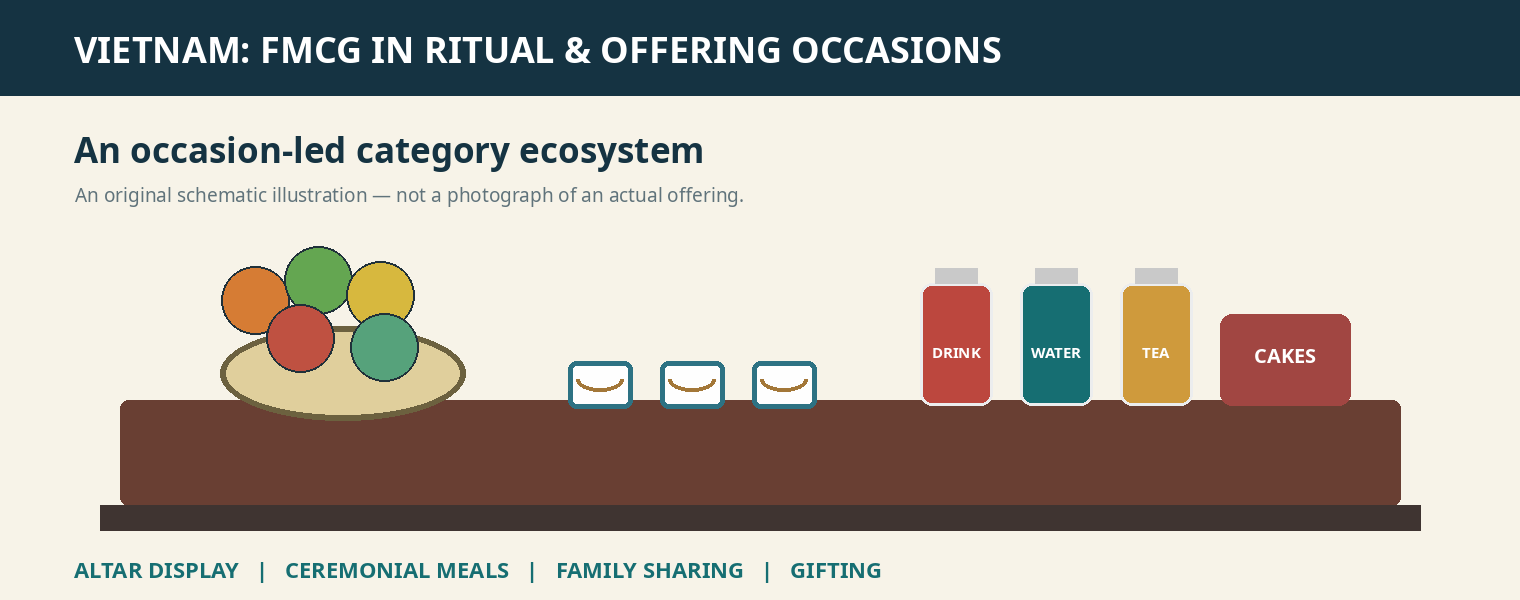
Original editorial schematic: ritual display, ceremonial meals, family sharing and seasonal gifting. Not a documentary photograph.
Purpose: Map which food and beverage categories are connected to Vietnamese worship-related occasions, which brand portfolios compete in each, and how the associated consumption roles differ. This document retains the full brand/category, occasion, regional, and role frameworks of the research response.
Evidence note: This is a documented competitive universe, not a statistically measured ranking of ritual-offering sales. “Leading” denotes broader Vietnamese category prominence when supported; example products and brands should not be interpreted as verified leadership specifically in ritual purchasing.
Worship-related purchasing in Vietnam is not a single “Buddhist offerings” category. It comprises Buddhist practices, ancestor veneration, monthly lunar observances, Tết, family death anniversaries, prosperity-related ceremonies and important annual festivals. For FMCG suppliers, the same product may be displayed on an altar, used to prepare a ceremonial meal, served afterwards to family, or purchased as a seasonal gift. These four roles create different competitive sets.
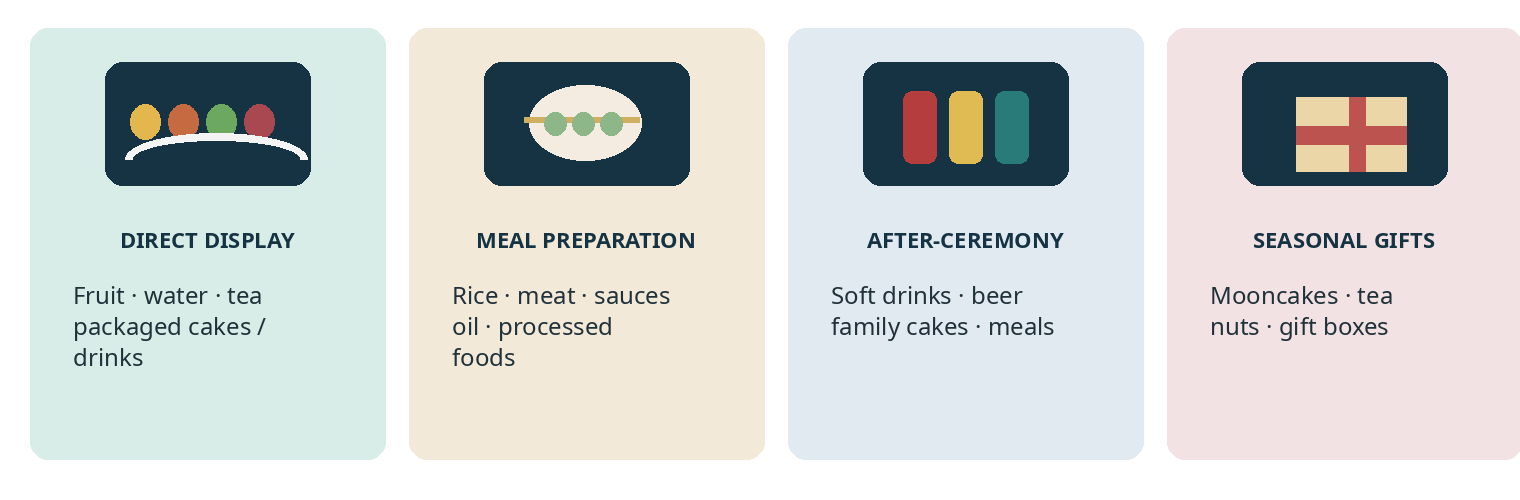
Figure 1. Four product roles. Illustrative product schematics; not actual product photography.
| Category | Indicative role / occasions | Interpretation |
|---|---|---|
| Soft drinks | Tết, ancestor rituals, family feasts | Branded display in some homes; broad hospitality relevance |
| Biscuits / confectionery | Tết, periodic offerings, family sharing | Strong packaged brand universe |
| Mooncakes / traditional cakes | Trung Thu, Tết, ancestor offerings | Occasion-defined product formats |
| Tea / coffee | Monthly offerings, ancestor remembrance, guests | Tea is widespread; coffee appears in some contemporary settings |
| Bottled water | Routine altar care, visits, monthly rituals | Cross-occasion replenishment relevance |
| Prepared foods / meat | Tết, giỗ, prosperity ceremonies | Ingredients and ceremonial meals |
| Vegetarian foods | Rằm, Vu Lan, Buddhist eating | Prepared offering trays versus everyday vegetarian foods |
| Beer | Tết, giỗ and some folk/ancestor settings | Primarily feast/hosting; not general Buddhist Buddha offerings |
| Dried fruit / nuts | Tết, gifts, hospitality | May support display but evidence is more gifting/consumption-led |
| Packaged fruit | Tết, monthly altars, ancestral rituals | Often local and unbranded |
| Cooking staples | Ceremonial food preparation | Indirect category role; not displayed as offerings |
| Dairy / nutrition drinks | Family consumption around celebrations | Peripheral to direct worship |
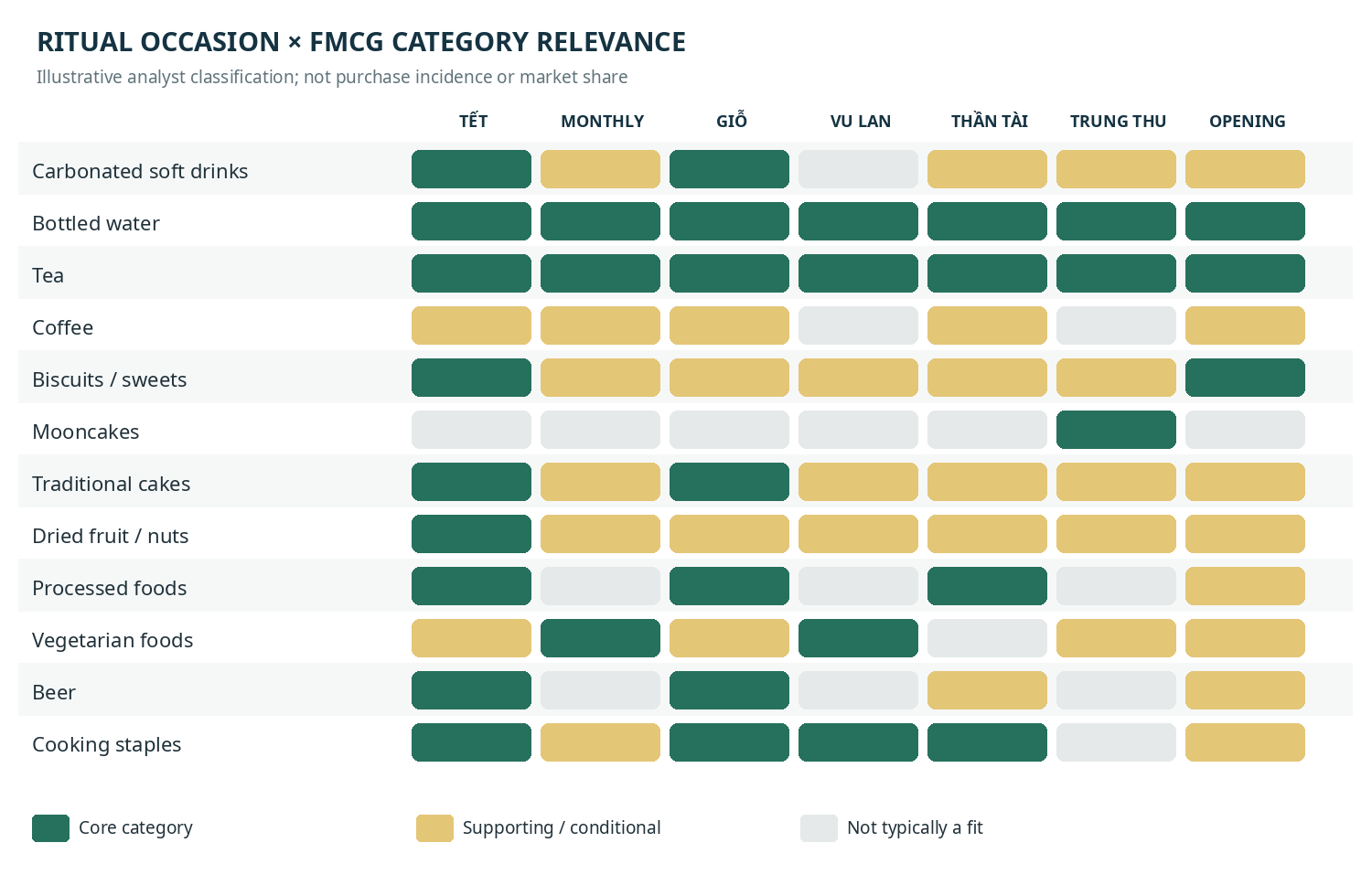
Figure 4. Qualitative analyst heatmap. Green = core/recurrent relevance; amber = secondary or conditional; grey = not a typical fit. This is not measured penetration or sales.
Water and tea are relevant across many observances, whereas mooncakes are tightly concentrated around Trung Thu. Cooking staples play a supporting role in meal preparation even where they are not displayed directly. Beer must be differentiated between family feasts, ancestor/folk altars and Buddhist temple/Buddha offerings.
The original background, earlier draft and latest research remain separate research layers. Documentary photographs, portfolio listings and qualitative assessments are not interchangeable evidence.
| Term | Meaning |
|---|---|
| Bàn thờ / bàn thờ gia tiên / bàn thờ Phật | Altar / ancestral altar / Buddha altar |
| Cúng, lễ | To offer, to perform a rite |
| Mâm cúng, mâm lễ, mâm cỗ | Offering tray; cooked feast tray |
| Mâm ngũ quả | Five-fruit tray |
| Mâm cỗ mặn / mâm cỗ chay | Savoury tray / vegetarian tray |
| Lộc, thụ lộc | Blessing; eating the offering after the rite |
| Giỗ, cúng kỵ | Death anniversary |
| Mùng 1, rằm | 1st and 15th of the lunar month |
| Ông Công Ông Táo | Kitchen gods (23/12 lunar) |
| Thần Tài, Ông Địa | Wealth god, earth god (floor altar in shops) |
| Vía Thần Tài | Wealth god's day (10/1 lunar) |
| Tam sên | Pork, egg and shrimp or crab set for Thần Tài |
| Cô hồn, chúng sinh, xá tội vong nhân | Wandering spirits; outdoor offerings, lunar month 7 |
| Giật cô hồn | Southern custom of grabbing the outdoor offerings |
| Vu Lan | Buddhist filial-gratitude day (15/7 lunar) |
| Hóa vàng | Burning votive paper; seeing the ancestors off after Tết |
| Vàng mã, giấy tiền | Votive paper goods and money |
| Hương, nhang | Incense |
| Trầu cau | Betel and areca |
| Rượu trắng, rượu nếp | White rice liquor; fermented sticky rice |
| Xôi, chè | Sticky rice; sweet soup |
| Bánh chưng, bánh tét | Square (North) and cylindrical (South) rice cakes |
| Bánh trôi, bánh chay | Glutinous rice balls for Hàn Thực |
| Bánh nướng, bánh dẻo | Baked and soft mooncakes |
| Tháp bia, tháp nước ngọt, tháp bánh | Beer, soft-drink and biscuit-box towers |
| Mâm cúng trọn gói, bộ lễ cúng | Ready-made full offering tray or set |
| Khai trương, động thổ, nhập trạch, cúng xe | Opening, ground-breaking, moving in, vehicle rite |
| Đầy tháng, thôi nôi | Baby's first month and first year rites |
| Ăn chay, chay kỳ | Vegetarian eating; scheduled vegetarian days |
| Để cúng, trưng, chưng | For offering; to display on the altar |
Supplied background research · 17 October 2026